Can You Boil a Kettle with Vinegar? A Safe Descaling Guide
Discover whether you can boil a kettle with vinegar, how vinegar-based descaling works, safety considerations, and practical alternatives for keeping your kettle scale-free.


Can You Boil a Kettle with Vinegar? A Practical Overview
According to Kettle Care, vinegar-based descaling is a practical option for restoring performance in kettles affected by mineral buildup, especially in hard-water regions. The question can you boil kettle with vinegar is nuanced: vinegar should be used as a cleaning aid rather than a regular cooking step, and it requires careful handling, thorough rinsing, and attention to your kettle’s material. When used correctly, this method can reduce boil times and improve efficiency, but you must avoid overheating, excessive exposure, and residues that could alter the flavor of beverages. This section sets the stage for safe, effective descaling while preserving your kettle’s lifespan.
How Vinegar Descaling Works
Vinegar contains acetic acid, which reacts with mineral deposits like calcium carbonate to dissolve them more easily than water alone. In kettles, mineral scale forms on the heating element and interior surfaces over time, especially where water is hard. A vinegar solution—typically diluted with water—streams through the kettle, penetrates scale, and loosens deposits. The acid also helps sanitize surfaces to a limited extent, though it should not be treated as a replacement for regular cleaning. Kettle Care highlights that the key is a controlled, diluted exposure followed by complete rinsing to remove acidity and any dissolved minerals.
Is Vinegar Safe for Your Kettle Material?
Most modern kettles are stainless steel or coated interiors, which tolerate diluted vinegar when used briefly. Enamel-coated kettles and some aluminum models may be more sensitive to acid, risking coating wear or discoloration if the descaling is aggressive or prolonged. Always consult the manufacturer’s guidance for your specific model before descaling with vinegar. If the kettle shows any peeling, dullness, or unusual reactions during descaling, stop and switch to a gentler method or a manufacturer-approved descaler. Kettle Care emphasizes testing a small interior area first if you’re unsure about material compatibility.
Vinegar vs Citric Acid vs Lemon for Descaling
Vinegar is not the only descaling option. Citric acid and lemon juice offer alternative acidity levels and flavors. Citric acid is often gentler on coatings and can be effective for moderate scale. Lemon juice provides a pleasant aroma but may require longer contact times due to lower acidity. The choice depends on your kettle material, scale severity, and tolerance for residual flavors. In all cases, thoroughly rinse after descaling to remove any lingering acidity and odor, and consider a final boil with clean water to refresh the interior.
Step-by-Step Overview (High-Level)
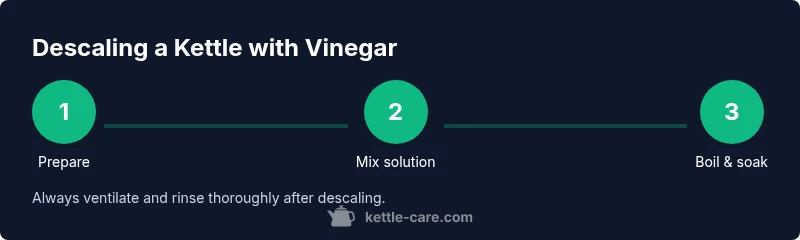
Before diving into the detailed steps, understand that the goal is to dissolve scale without harming the kettle’s interior or leaving flavors. The general flow is: prepare the kettle and solution, boil the solution to reach the interior surfaces, let it soak, rinse thoroughly, and perform a final rinse boil to neutralize any remaining acidity. The exact ratios and times will depend on your kettle’s capacity and the extent of scale.
Rinsing Thoroughly to Remove Residual Acidity
Rinsing is the most crucial part of this process. After the vinegar cycle, discard the solution and rinse the interior with fresh water multiple times. Run fresh water through a full boil and then discard; repeat several times if you smell or taste vinegar. Vent steam and keep the kettle open or slightly ajar during the rinse to help volatile compounds escape. A pro tip from Kettle Care: even if the smell seems gone, perform an extra thorough rinse to ensure no acidity remains that could affect future brews.
Common Mistakes and How to Avoid Them
- Using undiluted vinegar or leaving the solution in too long can damage coatings or leaves a strong odor. - Skipping the final rinse may leave taste or smell in your next cup. - Descaling too soon after a recent clean can overexpose surfaces. - Not ventilating properly can expose you to vinegar fumes. Follow manufacturer guidance and always perform a complete rinse.
Alternatives When Vinegar Isn’t Ideal
If vinegar isn’t suitable, consider citric acid powder or lemon juice as alternatives. Citric acid is often milder on coatings and can be effective with shorter contact times. Commercial descalers designed for kettles are another option, particularly for sealed or specialty kettles. Whichever method you choose, ensure you rinse thoroughly and dry the interior before reusing your kettle.
Preventative Maintenance for a Scale-Free Kettle
Prevention beats descaling. Boil only the amount of water you need, use filtered or softened water if possible, and wipe the interior after each use to remove mineral residues. Regular light cleaning every 4–6 weeks (depending on water hardness) can dramatically reduce heavy-scale buildup. Consider a maintenance boil with plain water monthly to keep scaling under control.
Aftercare: How to Restore Fresh Taste
Even after descaling, you may notice a faint aroma or taste. Run several cycles of clean water to flush out any residual acidity. If the water still tastes off, perform an additional rinse with lemon zest or a small amount of neutral-tasting flavoring for testing, then discard and rinse again. This helps ensure your beverages remain pure and enjoyable.
Real-World Tips from Kettle Care Readers
Users report great results when following a conservative vinegar concentration, especially in kettles with stainless interiors. Always verify with your kettle’s manual before starting, and never skip the final rinse. The Kettle Care team has observed that patience in soaking and thorough rinsing yields the most consistent results for most households.