How to Clean Inside a Kettle Without Vinegar
Learn vinegar-free ways to remove mineral buildup from kettle interiors using lemon juice, baking soda, or citric acid. Step-by-step instructions, safety tips, and maintenance guidance for safer, faster boiling.


According to Kettle Care, you can clean the inside of a kettle without vinegar by using lemon juice or baking soda with hot water, followed by thorough rinsing. This vinegar-free method removes mineral buildup and freshens taste while protecting kettle longevity. Ready to follow a safe, step-by-step approach that works on most kettle types.
Why cleaning inside a kettle matters
Mineral buildup, or limescale, is a natural result of repeated heating of hard water. According to Kettle Care, removing this buildup is essential to preserve heating efficiency, prevent off flavors, and prolong kettle life. A clean interior boils faster, uses less energy, and reduces the risk of scorching or uneven heating. Regular descaling also helps protect seals and gaskets from mineral pitting, which can lead to leaks over time. The good news is you can remove most deposits safely using vinegar-free methods that rely on common, non-toxic household ingredients. This approach works across electric kettles and stovetop models alike, including stainless steel, glass, and plastic interiors. By following a vinegar-free routine, you reduce chemical exposure and keep your water tasting fresh. In practical terms, plan for cleaning every few weeks if you live in a hard-water region and adjust frequency based on usage. Visual cues like a chalky white ring on the interior walls or a cloudy bottom often signal it is time to act. Always consider heat element design and materials; some coatings respond better to gentler descalers. Regular maintenance not only keeps your kettle efficient but also protects it from scale that might affect sensors and seals.
Quick cues for timing and technique
- Clean when you notice slower boils or a cloudy interior.
- Avoid abrasive scrubbing on coated interiors to prevent scratching.
- Always drain, rinse, and dry the interior after descaling to prevent new residue from forming.
- If you own a plastic interior, choose gentler descalers to avoid surface crazing or cloudiness.
Tools & Materials
- Unplugged electric kettle or off-heat stovetop kettle(Ensure it is cool before cleaning; remove from base if applicable)
- Water(Use distilled water if your tap water is very hard or highly mineralized)
- Lemon juice(Fresh juice is best; used for lemon-based cleaning method)
- Baking soda(1–2 tablespoons dissolved in water per cleaning cycle)
- Citric acid(Alternative descaler; use sparingly according to manufacturer guidance)
- Soft cloth or non-abrasive sponge(For wiping interior walls without scratching coatings)
- Non-scratch brush(Optional for stubborn spots on metal or glass interiors)
- Towel or dry cloth(Dry the interior after rinsing to prevent new mineral deposits)
Steps
Estimated time: 25-40 minutes
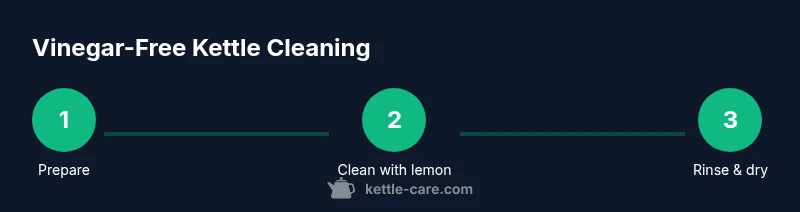
- 1
Prepare the kettle
Unplug the kettle and ensure it is cool. Empty any remaining water and remove any removable filters if your model has them. This creates a safe workspace and prevents splashing during cleaning.
Tip: Keep the base away from water splashes; never submerge the base of an electric kettle. - 2
Fill with lemon-water cleaning solution
Pour water into the interior and add lemon juice in a roughly 1:1 ratio until the interior is partially covered. This creates a gentle acidic-descaling environment without harsh chemicals.
Tip: Fresh lemon juice is preferred for stronger acidity and fresh scent; avoid concentrated lemon extracts that may contain additives. - 3
Boil the solution
Place the kettle on its base and bring the lemon-water solution to a boil. Let it continue to simmer for about 5 minutes to loosen mineral deposits, then turn off the heat and allow the solution to sit for 10 minutes.
Tip: If your kettle has a thermal fuse or sensitive element, monitor closely and avoid prolonged high heat. - 4
Scrub interior gently
After soaking, use a soft cloth or non-abrasive sponge to wipe the interior walls, focusing on ringed or crusty patches. For stubborn spots, a soft-bristle brush can help without scratching.
Tip: Do not use metal scrubbers; they can scratch or remove coatings and dull the interior. - 5
Rinse thoroughly and flush
Rinse the kettle several times with clean water until there is no lemon scent or visible residue. Fill again with fresh water and bring to a boil to flush any remaining deposits.
Tip: Aim to flush at least two full kettles of water to ensure all residues are cleared. - 6
Optional baking soda follow-up
If mineral buildup persists, repeat the process using a baking soda solution (1–2 tablespoons per liter of water). Boil, soak for 10 minutes, scrub lightly, and rinse well.
Tip: Baking soda creates a mild abrasive action; avoid over-scrubbing on coated interiors to prevent wear. - 7
Dry and inspect
Wipe the interior dry with a towel and visually inspect for any remaining scale. If you still see deposits, repeat the appropriate method once more or alternate with citric acid according to the manufacturer’s guidance.
Tip: Completely dry cavities help prevent new scale from forming during storage.
Frequently Asked Questions
Can I use lemon juice in a kettle with a nonstick interior?
Yes, lemon juice is generally safe for most nonstick interiors when used in moderation and followed by thorough rinsing. Avoid aggressive scrubbing that could wear coatings away. Always check your kettle’s manufacturer guidelines before using citrus-based cleaners.
Yes, lemon juice is typically safe for nonstick interiors if you rinse well and don’t scrub aggressively. Check your manual if you’re unsure.
Is baking soda safe to use in plastic kettles?
Yes, baking soda is a gentle descaler for many kettle interiors, including some plastics, when used as a dilute solution and rinsed thoroughly. Avoid leaving baking soda residues and follow with a complete rinse and boil to flush.
Baking soda is generally safe for plastic interiors when properly diluted and rinsed.
How often should I descale without vinegar?
Descale frequency depends on water hardness and kettle usage. If you notice slower boils, cloudy interiors, or white deposits, perform a vinegar-free clean. In hard-water areas, monthly or bi-monthly descales are common.
If your water is hard or you use the kettle a lot, clean it every few weeks; otherwise, every couple of months is often enough.
Can I use bleach or other harsh cleaners in a kettle?
No. Bleach or ammonia should never be used inside kettles. Residues can leach into water and pose health risks. Stick to vinegar-free descalers like lemon juice or baking soda and rinse thoroughly.
Never use bleach in a kettle; it's unsafe. Use lemon juice or baking soda and rinse well.
What if the lemon smell lingers after cleaning?
A lingering lemon scent usually means residue remains. Boil fresh water to flush, discard, and re-check interior. If needed, repeat the lemon-cleaning cycle or switch to baking soda for an extra flush.
If lemon smell sticks around, flush with fresh water by boiling, then re-check and rinse again.
Do these methods affect non-metal coatings?
Gentle descalers like lemon juice and moderate baking soda use are generally safe, but always follow the manufacturer’s guidance on coatings and avoid abrasive scrubbing that can wear coatings.
Use gentle descalers and avoid scrubbing hard on coatings; check your manual for coating-specific advice.
Watch Video
Highlights
- Choose a vinegar-free method (lemon or baking soda) based on your kettle material.
- Boil, soak, scrub, and rinse thoroughly to remove all residues.
- Routinely descale to maintain efficiency and extend kettle life.
- Dry interior after cleaning to prevent new mineral buildup.
- The Kettle Care team recommends regular vinegar-free cleaning for safer boiling.