How to Clean Water Kettle: Safe Descaling Guide
Learn a safe, effective descaling routine to clean water kettles. This step-by-step guide covers vinegar, citric acid, and maintenance tips for safer boiling and better flavor.


Following a simple descaling routine restores heating efficiency and flavor. You’ll need distilled water, a safe descaler such as white vinegar or citric acid, and a soft sponge for exterior cleaning. This guide shows how to clean water kettle safely—whether electric or stovetop—and how to prevent mineral buildup with regular maintenance.
Why Regular Cleaning Matters for Water Kettles
If you're wondering how to clean water kettle, regular cleaning keeps mineral buildup from reducing efficiency, affecting flavor, and shortening kettle life. Mineral deposits from hard water act like a barrier, forcing the kettle to work harder and longer, which wastes energy and can shorten the appliance's lifespan. According to Kettle Care, routine descaling helps maintain rapid boil times and consistent water temperature. The Kettle Care team found that scale tends to accumulate where water repeatedly boils, forming a crust on heating elements and interior surfaces. Keeping your kettle clean also minimizes off-tastes and odors that minutes of boiling can't completely erase. A simple quarterly descaling habit, plus monthly exterior wipe-downs, offers protective maintenance without requiring special tools.
- What to know before you start: check your kettle’s manual for any manufacturer warnings about cleaning agents or coatings.
- Quick diagnostic: if your kettle takes noticeably longer to boil or tastes metallic, scale buildup is likely a factor requiring attention.
Safe Cleaning Methods: Vinegar, Citric Acid, or Boiling Water
There are several safe, effective options to descale your kettle. The most common methods use household descalers that break down mineral deposits without harsh chemicals. Vinegar is widely effective; however, some kettles may retain a slight odor after vinegaring, so thorough rinsing is essential. Citric acid is a milder alternative with little to no odor. For light buildup, a gentle boil of plain water can help loosen minerals first. When choosing a method, always consult your kettle’s manual to ensure compatibility with descalers. Kettle Care analysis shows that using a dedicated descaler or food-grade acid is safer for coatings and electronics than abrasive cleaners.
- Vinegar method: mix equal parts distilled water and white vinegar, fill the kettle, bring to a boil, and then let it sit for 15–20 minutes before rinsing.
- Citric acid method: dissolve 1–2 tablespoons of citric acid in a liter of water, boil, and soak for about 10–15 minutes, then rinse thoroughly.
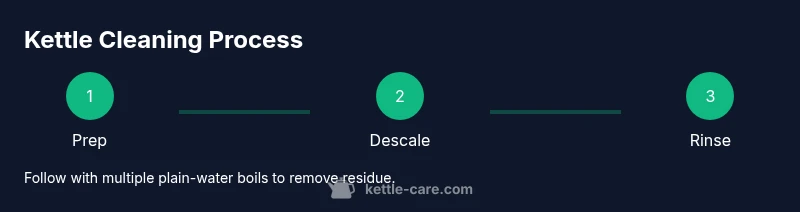
- Plain water flush: after descaling, boil several full cycles of clean water to remove any residual scent or taste.
How to Descale a Stainless Steel Kettle
Stainless steel kettles are the most common and respond well to descaling, but you should avoid harsh abrasives and metal scouring pads that can scratch the surface. Start with a descaling solution (vinegar or citric acid as described above) and fill the kettle so liquid covers the scale-prone areas. Bring to a boil, then reduce heat and let the solution simmer for a few minutes. Turn off, allow to cool, and rinse repeatedly with fresh water. Finally, wipe the exterior with a damp cloth and dry thoroughly to prevent new deposits from forming while the kettle is warm. Regular, gentle treatment keeps the interior gleaming and the heating element protected.
- Focus on the spout and lid area where mineral buildup often hides.
- After rinsing, you can run a quick boil of plain water to freshen the interior.
How to Clean an Electric Kettle vs Stovetop Kettle
Electric kettles often have concealed heating elements and may have plastic or coated interiors that react differently to cleaning agents. For electric kettles, avoid soaking or submerging the base and ensure that no water enters the electrical components. Use a damp cloth to wipe the exterior and a descaling solution inside, then rinse multiple times with clean water. For stovetop kettles, you can use stronger descalers on the interior and pay extra attention to the base where mineral buildup can accumulate near the heating surface. Always unplug and cool the unit before cleaning, and never place any part in a dishwasher unless the manufacturer approves.
- Exterior care: wipe with a soft cloth and dry after each use.
- Interior care: ensure complete rinsing to avoid lingering taste.
Deep Clean and Maintenance Routines
To keep mineral buildup at bay, adopt a routine that matches your water hardness and usage. Perform a thorough descaling every few months or when you notice slower boiling or cloudy water. Between descalings, rinse the kettle with clean water after each use and wipe the exterior weekly to remove dust and fingerprints. If your water is particularly mineral-rich, consider a monthly maintenance cycle using a citric acid soak, followed by multiple water-only boils to flush the system. Keeping your kettle clean helps it boil faster, reduces energy use, and preserves flavor integrity for tea and other hot beverages.
- Maintain a gentle, consistent cleaning rhythm rather than waiting for the scale to harden.
- Replace any filters or cartridges as recommended by the manufacturer.
Troubleshooting Common Issues After Cleaning
If you still notice off-flavors or odor after cleaning, several simple checks can help. Ensure you have completed all rinse cycles until no scent remains, and try a fresh descaling cycle with a different descaler if odors persist. For stubborn mineral deposits, a longer soak with citric acid may be necessary. If the exterior finish looks dull, a mild polish and a silicone-free cloth can restore shine without harming the surface. If problems persist, consult the brand’s support resources or refer to the manual for warranty guidance and safe cleaning practices.
- Odor or taste after cleaning can usually be cured with additional rinse cycles.
- Do not use bleach or abrasive cleaners on kettles.
- If your kettle has a warranty, check restrictions before attempting aggressive cleaning.
Tools & Materials
- distilled white vinegar(Use undiluted or diluted as part of a descaling solution; avoid concentrated solutions near hot surfaces)
- Citric acid powder or lemon juice(Citric acid: 1–2 tablespoons per liter of water; lemon juice is a milder alternative)
- Distilled water(Use to prepare descaling solution and for rinsing cycles)
- Soft sponge or microfiber cloth(For exterior cleaning and wiping the lid and handle)
- Measuring cup or tablespoon(To measure descaling agents accurately)
- Non-abrasive brush(For light interior scrubbing if needed; avoid metal bristles)
- Dish soap (mild)(For exterior cleaning after descaling if needed)
- Protective gloves(Optional for handling descaling solutions)
Steps
Estimated time: 40-60 minutes
- 1
Unplug and cool the kettle
Before any cleaning, unplug the kettle and allow it to cool completely. This prevents electrical hazards and avoids burns when handling hot water or cleaning solutions.
Tip: Keep a towel handy in case the kettle is warm and a little steam escapes. - 2
Prepare descaling solution
Choose your descaling approach: vinegar solution (1:1 with water) or citric acid (1–2 tablespoons per liter). Mix in the kettle or a heat-safe container.
Tip: If you use vinegar, consider starting with a weaker mix if your kettle is sensitive to odor. - 3
Fill and soak
Fill the kettle with the descaling solution so that scale-prone areas are covered. Let soak for 10–20 minutes to loosen mineral deposits.
Tip: For stubborn scale, extend soak time by short increments, but avoid leaving solution in electronic kettles for too long. - 4
Boil and steep
Boil the solution, then turn off heat and let it steep for several minutes. This helps dissolve mineral buildup without aggressive scrubbing.
Tip: Do not overfill; follow manufacturer guidelines to prevent boil-over. - 5
Rinse thoroughly
Discard the used solution and rinse the kettle several times with fresh water until no descaler taste or smell remains.
Tip: Run multiple full-water boils to ensure all residues are flushed out. - 6
Exterior cleaning and dry
Wipe the exterior with a damp cloth, then dry with a clean towel. Check the lid and handle for any trapped moisture.
Tip: A quick wipe-down after each use helps prevent fingerprint marks and dust buildup. - 7
Test with clean water
Boil a full cycle of clean water and discard it to confirm interior freshness before using for tea or coffee.
Tip: Taste-test a small amount of the boiled water; if any odor remains, repeat rinsing steps.
Frequently Asked Questions
How often should I descale my kettle?
Descale based on water hardness and usage. In hard water areas, a monthly or bi-monthly cycle is common; in softer water, quarterly maintenance may suffice. Always inspect for mineral buildup and adjust your routine.
Descale based on hardness and usage; in hard water areas check monthly, otherwise every few months.
Can I use vinegar to descale my kettle?
Yes, vinegar is effective for descaling. Dilute with water, boil, and rinse thoroughly. If you notice any lingering odor, run extra plain water boils to neutralize.
Vinegar works well; dilute, boil, and rinse until neutral.
Is lemon juice a safe alternative to vinegar?
Lemon juice can descalate minerals but is milder. It may leave a citrus scent; rinse well and run several clean-water boils to clear any residue.
Lemon juice is milder; rinse well and boil clean water to remove scent.
Do I need to boil water after cleaning?
Yes. Boiling fresh water after cleaning helps remove any lingering tastes or smells and confirms the kettle is ready for use.
Boil fresh water after cleaning to ensure freshness.
Can I descale a plastic kettle?
Descaling is generally safe for plastic kettles, but avoid prolonged soaking if the manufacturer warns against it. Rinse thoroughly and avoid harsh abrasives that could scratch the surface.
Descale plastic kettles carefully, following the manual and rinse well.
What if scale remains after cleaning?
If deposits persist, repeat the descaling cycle with a stronger concentration or try a different descaler. For stubborn cases, contact customer support or consult the manual for safety-approved methods.
Repeat descaling or try another descaler; consult the manual if needed.
Watch Video
Highlights
- Choose a compatible descaler first.
- Rinse until taste and scent are gone.
- Maintain a regular descaling routine for longevity.
- Dry interior and exterior thoroughly after cleaning.