How to Descale a Kettle with Citric Acid
Learn a safe, effective way to descale your kettle with citric acid. This step-by-step guide covers ratios, soaking, rinsing, safety, and maintenance for optimal performance.


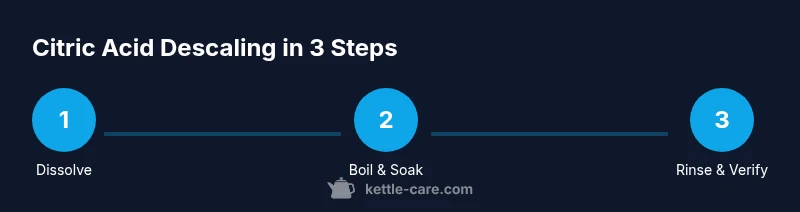
Descale a kettle quickly and safely using citric acid. Gather citric acid, clean water, a measuring cup, and a soft brush. Create a descaling solution, fill the kettle, and bring it to a gentle boil. Let the solution sit, then rinse thoroughly and repeat for heavy buildup. Unplug before cleaning and follow the kettle manufacturer’s guidance.
Why Citric Acid is a Safe Descaler
Citric acid is a natural, food-grade compound that dissolves mineral deposits without harsh chemicals. According to Kettle Care, citric acid is effective, inexpensive, and environmentally friendly for routine descaling. In kettles, limescale forms from minerals in hard water; if left untreated it reduces heating efficiency, changes taste, and can shorten kettle lifespan. Citric acid works by chelating calcium and magnesium ions, which loosens scale and makes it easy to rinse away. This method is generally safe for stainless steel, glass, and many enamel coatings, but always check your kettle's instruction manual for any coatings that might require a gentler approach. For most households, citric acid descaling is a fast, predictable option that avoids caustic cleaners, fumes, or strong odors. When compared to vinegar, citric acid tends to leave a neutral smell and reduces the risk of flavor transfer to hot drinks. A well-executed citric acid descale should restore original performance without damaging the internal surfaces.
Incorporating citric acid aligns with practical, home-friendly maintenance. The Kettle Care team notes that this approach minimizes chemical exposure while delivering reliable mineral removal. Regular descaling not only improves taste but also keeps the kettle heating efficiently, reducing energy use over time.
Tools & Materials
- Citric acid (food-grade), granulated(Approximately 1–2 tablespoons per liter of water depending on buildup)
- Clean water(Fresh water for the descaling solution and final rinses)
- Measuring spoon(Tablespoon or metric equivalent for accurate dosing)
- Kettle brush or non-abrasive sponge(Use gently to avoid scratching interior surfaces)
- Soft cloth or towel(For drying exterior and wiping spout areas)
- Optional safety gear(Gloves if you have sensitive skin or prefer extra protection)
Steps
Estimated time: Total time: 20-40 minutes, plus soak time if buildup is heavy
- 1
Measure and dissolve citric acid
Dissolve the citric acid in warm water to form a clear descaling solution. Stir until completely dissolved, which aids even distribution and faster buildup removal.
Tip: Warm water helps dissolve citric acid more quickly, reducing stirring time. - 2
Fill the kettle with the descaling solution
Pour the solution into the kettle up to the maximum fill line. If there’s a spout filter or scale port, clear it so the solution can circulate freely.
Tip: Leave the lid slightly ajar if your kettle allows venting during descaling. - 3
Boil the solution and soak
Bring the solution to a gentle boil, then switch off the heat and let the kettle soak for 10–15 minutes. This soak loosens mineral deposits and begins the lifting process.
Tip: Do not leave unattended while boiling; safety first. - 4
Scrub remaining scale
After soaking, use a soft brush or non-abrasive sponge to gently scrub interior surfaces where scale remains. Focus on corners and the area above the water line.
Tip: Scrub with light, circular motions to avoid scratches. - 5
Rinse thoroughly with clean water
Empty the kettle and rinse it several times with clean water to flush out citric acid and loosened minerals. Use fresh water each rinse to ensure no citric taste remains.
Tip: Run a short boil of clean water to finalize rinsing. - 6
Final check and dry
Test by boiling a fresh batch of water and tasting a tiny sample. If taste or odor persists, rinse again. Wipe the exterior dry to prevent water spots.
Tip: If the odor lingers, repeat the rinse cycle once more.
Frequently Asked Questions
Is citric acid safe for all kettle finishes?
Citric acid is generally safe for stainless steel and glass kettles. Always check the manufacturer's guidance about coatings or enamel, and avoid prolonged contact with damaged surfaces. Rinse thoroughly to prevent any aftertaste.
Citric acid is usually safe for stainless steel and glass kettles, but always check your kettle’s manual and rinse well.
Can I use lemon juice instead of citric acid?
Lemon juice is acidic, but it contains water and may leave a lemon flavor. Citric acid powder provides a more consistent descaling action and easier, predictable rinsing. For best results, use citric acid as described.
Lemon juice can work, but citric acid gives a more consistent clean with less risk of taste transfer.
How long should the descaling solution soak?
A typical soak lasts 10–15 minutes after boiling. For heavy buildup, you may extend the soak slightly, but avoid prolonged contact that could affect coatings.
Soak for about 10–15 minutes after boiling, and extend a bit for heavy buildup if needed.
Do I need to rinse after descaling?
Yes. Thorough rinsing with fresh water is essential to remove citric acid and mineral residues. Run multiple water cycles and test a sample boil to confirm no aftertaste.
Yes—rinse thoroughly with fresh water and boil clean water to verify no citric taste remains.
How often should I descale a kettle with citric acid?
Descale based on water hardness and usage. Typical households can descale every 1–3 months, with more frequent maintenance for very hard water.
Descale every 1–3 months depending on hard water and use.
Can I use this method on electric kettles with plastic parts?
Citric acid descaling is generally safe, but always confirm with the manufacturer about any plastic coatings or seals. Keep exposure minimal and rinse thoroughly.
Check your kettle’s manual; most plastic parts tolerate citric acid when rinsed well.
Watch Video
Highlights
- Descale safely with citric acid using a simple 1–2 tbsp per liter ratio.
- Rinse thoroughly to avoid lingering taste; repeat if necessary.
- Check your kettle’s manual to ensure compatibility with acidic descalers.
- Regular descaling maintains efficiency and prolongs kettle life.