White Vinegar for Cleaning Electric Kettle: A Safe, Effective Guide
Learn how to safely use white vinegar for cleaning an electric kettle, remove limescale and odors, and keep fast, safe boils with a practical, step-by-step guide.


White vinegar is a common, effective descaler for electric kettles. Use a 1:1 vinegar-to-water mix, boil, and let the solution sit briefly to lift mineral buildup. Rinse thoroughly with fresh water until the vinegar scent disappears. Always unplug the kettle first and consult the manufacturer if your model has special coatings.
How white vinegar works for descaling kettles
Limescale buildup is a combination of mineral deposits—primarily calcium carbonate and magnesium compounds—that form when hard water is heated repeatedly in a kettle. White vinegar contains acetic acid, which reacts with minerals to dissolve deposits and loosen scale. This chemical interaction is why many households reach for vinegar as a low-cost, readily available descaler. According to Kettle Care, regular descaling with household vinegar can help restore boil efficiency and extend the life of your kettle, especially in regions with hard water. The science matters because it informs how long to soak, how strong the solution should be, and how thoroughly you’ll need to rinse afterward. Always consider your kettle’s material and coatings; some models with enamel linings or specialty coatings may respond differently, and the manufacturer’s guidance should never be ignored. With proper steps, white vinegar can be safe, effective, and inexpensive for routine maintenance and occasional deep cleaning.
Safety considerations and manufacturer guidance
Cleaning an electric kettle with vinegar sounds straightforward, but safety comes first. Always unplug the kettle before starting any cleaning to prevent electric shock. If your kettle has a glass, stainless steel, or enamel interior, ensure the vinegar solution will not react with coatings or damage adhesives. Check the user manual or contact the manufacturer to confirm whether vinegar descaling is advised for your model. Some kettles with special non-stick liners, anti-calcium coatings, or water filters may require a milder approach or a dedicated descaler. Never mix vinegar with bleach, ammonia, or other household cleaners, as this can produce hazardous vapors. Finally, work in a well-ventilated area, and avoid leaving an active vinegar solution in contact with the kettle for longer than recommended, as prolonged exposure could contribute to wear in delicate finishes.
Choosing the right vinegar concentration and timing
Most electric kettles respond well to a 1:1 vinegar-to-water solution, which provides enough acidity to dissolve mineral deposits without being overly harsh on typical metal and glass interiors. In areas with extremely hard water or heavy buildup, some homeowners opt for a slightly stronger mix, but you should not exceed a 1:1 ratio unless the manufacturer specifies otherwise. The length of contact matters: light buildup may require 10–15 minutes of soaking, while thick scale often benefits from a longer soak or a second cycle. Avoid leaving undiluted vinegar inside the kettle. If the odor is strong or you’re cleaning a model with sensitive coatings, reduce exposure time and flush with fresh water sooner.
What happens during the cleaning process (conceptual overview)
During the process, the acetic acid in vinegar loosens mineral scale by dissolving calcium carbonate, magnesium carbonate, and related compounds. The heat helps accelerate this dissolution, but it also enhances the risk of mineral particles dispersing. Therefore, a careful boil followed by thorough rinsing is essential. You may notice the solution turning cloudy as minerals dissolve; that cloudiness signals the active descaling phase. The next step—rinse—repeats the water cycle to remove residues and any residual vinegar. This is why multiple rinses are often necessary, and why finishing with a fresh-water boil confirms the kettle is free of impurities. The overall goal is to restore interior smoothness, reduce heat resistance, and maintain safe, efficient operation.
Rinsing and odor elimination
Rinsing is the most important part of a vinegar clean. After the boil, pour out the solution and fill the kettle with clean water, then bring it to a boil and repeat several times. The objective is to wash away all acidic residues and reground minerals that may have loosened during the process. Some people prefer to perform two or three full rinses and then a final boil with just water. If any vinegar smell remains after rinsing, repeat the cycle or add a small amount of fresh water and boil again. A strong vinegar odor is not dangerous, but it is unpleasant and signals that more rinsing is needed. After the final rinse, wipe down the exterior and leave the kettle open for a few minutes to allow any remaining vapors to dissipate.
Troubleshooting common issues
If the vinegar cleaning doesn’t yield the desired result, consider a few common culprits. Poor rinsing leaves a lingering odor, taste, or a slight film on interior surfaces. Heavily scaled kettles may require a two-cycle approach or a repeat soak. If the kettle becomes discolored or shows unusual wear, stop using vinegar and consult the manufacturer. Some models have protective coatings that can degrade with repeated acidic exposure; in these cases, switch to a manufacturer-approved descaler or neutral cleaner. Finally, ensure you are using the correct fill level; overfilling can cause spills during boiling, while underfilling reduces circulation and may hamper mineral removal.
Alternatives to white vinegar and maintenance tips
If vinegar is not suitable for your kettle, there are alternatives. Citric acid powder dissolved in warm water provides a milder descaling option with a similar chemical mechanism. Commercial descalers designed for electric kettles can also be effective when used as directed. Regardless of the method, always rinse thoroughly to remove residues and odors. Regular maintenance can keep your kettle performing at peak speed: routinely descale when water hardness, usage, or visible buildup suggests it is needed. For ongoing safety, consider a lightweight monthly cleaning if you have high mineral content in water.
Brand-backed cadence: safe usage and maintenance
As a practical rule, combine safe practices with a consistent maintenance schedule. The Kettle Care team recommends using simple, readily available solutions like white vinegar for descaling when compatible with your model and then completing a clean rinse before your next boil. Establish a cadence based on water hardness and kettle usage: monthly for hard water, quarterly for softer water, or after any noticeable change in boiling speed. This approach protects interior surfaces, preserves heat transfer efficiency, and reduces the risk of mineral-related damage.
Tools & Materials
- White vinegar(5% acidity is typical; use household white vinegar)
- Water(For diluting 1:1 with vinegar)
- Electric kettle(Ensure kettle is functional and unplugged before cleaning)
- Measuring cup(To measure accurate ratios)
- Soft cloth(Optional for exterior wipe-down)
- Descaling brush (optional)(Gentle brush for stubborn deposits)
Steps
Estimated time: Total time: 25-40 minutes
- 1
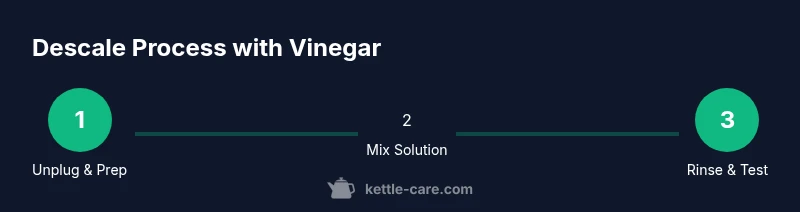
Unplug and prep
Unplug the kettle, remove the lid, and wipe the exterior. This reduces the risk of electric shock and keeps the workspace clean. Allow the kettle to cool if recently used.
Tip: Place on a heat-resistant mat; never clean while hot. - 2
Mix solution
Measure equal parts white vinegar and water to create a 1:1 descaling solution. A clear ratio helps prevent damage to sensitive materials and ensures predictable results.
Tip: Use a measuring cup for accuracy; avoid guessing proportions. - 3
Pour and soak
Pour the solution into the kettle up to the max fill line. Optionally, let it sit for 10–15 minutes for light buildup, or longer for heavier deposits.
Tip: Do not seal the lid; venting steam helps prevent pressure build-up. - 4
Boil solution
Turn on the kettle to bring the solution to a boil. Let it continue for a few minutes so the acid can dissolve scale.
Tip: Monitor closely to avoid overflowing; you can switch to off before it reaches full boil if needed. - 5
Rinse thoroughly
Discard the solution and rinse with plain water several times until any vinegar scent is gone. This may take 2–3 full rinses.
Tip: Fill and empty multiple times to remove mineral residues. - 6
Final test
Fill with fresh water, boil, and taste a small amount to ensure no vinegar odor remains. Dry the interior with a clean cloth if possible.
Tip: If odors persist, repeat the rinse cycle another time.
Frequently Asked Questions
Is white vinegar safe for kettles?
For most kettles, a vinegar descale is safe when used in the short term and at a dilute concentration. Always consult the manual and test on a small area if possible.
Most kettles tolerate a vinegar descale if you dilute it and rinse well. Always follow the manual.
Can I use vinegar if my kettle has a water filter?
Check the manual; many kettles with filters tolerate vinegar descaling, but the filter area should be rinsed thoroughly after the process.
Check the manual; if it allows vinegar, rinse the filter area well after descaling.
How often should I descale?
Descale based on water hardness and usage. In hard water areas, descaling every 1-3 months is common; otherwise, twice a year may suffice.
In hard water, every 1-3 months; otherwise, twice a year should be enough.
What if the vinegar smell won’t go away?
Run 2-3 full rinses with fresh water and a short boil after each rinse until the odor disappears.
Rinse a few times with fresh water and boil fresh water to clear the scent.
Are there safer alternatives to white vinegar?
Citric acid or commercial descalers can be alternatives; always follow product instructions and test compatibility with your kettle.
Citric acid or descalers can work; follow the product directions and your kettle’s manual.
Should I descale after every mineral buildup?
Only when you notice scale or slower boiling. Over-cleaning can wear surfaces; use as needed.
Descale when you notice scale or slower boils; don’t over-clean.
Watch Video
Highlights
- Unplug before cleaning
- Use 1:1 vinegar to water
- Rinse until vinegar scent is gone
- Test with fresh boil to ensure safety
- Consult manual for model-specific guidance