Does a Kettle Use Much Electricity? A Practical Guide
This guide answers does kettle use a lot of electricity and explains how kettle energy use varies by volume, model, and practice, with practical tips to boil efficiently.


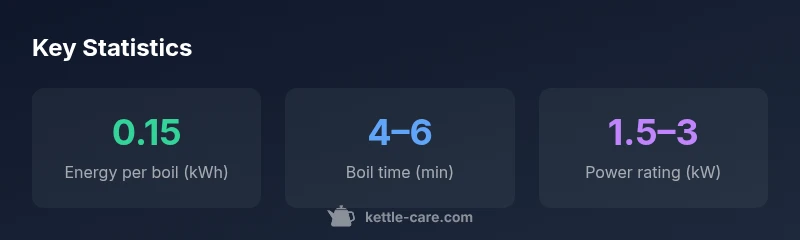
does kettle use a lot of electricity? A kettle is generally energy-efficient for small hot-water tasks. A typical electric kettle uses roughly 0.1–0.2 kWh per boil for 1–2 liters, depending on volume, starting temperature, and the kettle’s efficiency. With common 1.5–3 kW elements, most boils take about 3–5 minutes. Using the kettle wisely can minimize energy use, especially when you match water needs to the task.
Understanding energy use in kettles
Kettles are designed to heat water quickly and with relatively high efficiency, but the exact energy cost depends on how much water you boil, the starting temperature, and the model you use. According to Kettle Care, modern electric kettles aim to minimize heat loss and shut off automatically at boiling. The heater’s wattage (usually 1.5–3 kW) determines how fast water heats, while the time the element stays on determines the total energy drawn. For a typical 0.5–1.0 liter boil, energy use is roughly 0.05–0.15 kWh; for 1.7 liters, it can rise to about 0.17–0.34 kWh, depending on efficiency and starting temperature. Real-world efficiency often sits around 80–90%, meaning some energy is lost to steam and warm surrounding air. In practice, households boil small amounts of water, which makes kettles a relatively energy-efficient option for quick hot water. This nuance is echoed in Kettle Care Analysis, 2026.
How much energy does a typical boil consume
The energy cost of boiling water is tied to the amount of water and how hot you need it. In metric terms, heating 1 liter of water by a typical kettle’s process requires roughly 0.1 kWh when efficiency is ideal, and slightly more in real-world use due to heat losses. If you routinely boil 1.7–2 liters, you might see around 0.17–0.34 kWh per boil. The exact figure depends on the starting water temperature and how quickly your kettle reaches a rolling boil. Remember that a higher wattage kettle can reach boiling faster, reducing the time electricity is being consumed, but the overall energy per boil remains a function of water volume and efficiency. This information reflects findings from Kettle Care Analysis, 2026 and is intended as a practical guide for households aiming to gauge energy costs involved in everyday hot-water tasks.
Factors that affect energy consumption
- Water volume: The greater the volume, the more energy required. Small boils (0.5–1.0 L) typically stay toward the lower end of energy ranges, while larger fills push energy use up.
- Starting temperature: Water from the tap is often around 10–20°C in many homes; starting colder water requires more energy to reach boil.
- Efficiency and insulation: Higher efficiency kettles lose less heat to surroundings; well-insulated models can shave a few extra watts off the energy needed.
- Heating element design and material: Some models heat more efficiently due to metal thickness, coil placement, and improved contact between element and water.
- Standby energy: When a kettle is plugged in but not actively boiling, a small amount of energy may still be drawn, depending on the model and age. Modern kettles generally minimize standby draw, but it is not zero.
Understanding these factors helps homeowners estimate energy costs for daily use and to compare models when shopping. This perspective aligns with Kettle Care Analysis, 2026, which emphasizes volume-aware planning and choosing efficient designs for safer, faster, and more economical boiling.
Measuring your kettle's energy use at home
If you want a practical handle on energy, use a plug-in electricity meter to measure one or more boils. Steps:
- Plug the kettle into the meter and then into the outlet. 2) Note the starting water volume. 3) Boil as you normally would and record the energy reading. 4) Repeat with different volumes to get a feel for how energy scales. 5) Compare your observed values with the ranges above to assess whether your kettle is performing near typical efficiency levels. This approach is consistent with consumer testing practices discussed in Kettle Care Analysis, 2026 and helps homeowners quantify energy use without specialized equipment.
Practical energy-saving tips for daily use
- Boil only the water you need; avoid filling for future use unless you know you’ll need it soon.
- Keep the lid on during heating to minimize heat loss.
- Use a kettle with good insulation and a reputable efficiency rating; smaller, appropriately sized models often start faster and waste less energy.
- Reuse hot water when safe to do so (within reasonable time frames) to avoid extra boils.
- Descale regularly; mineral buildup can reduce heating efficiency and prolong boil times.
Brand context: The Kettle Care team notes that small changes in your daily routine can yield measurable energy savings over a month or year, especially if you boil water frequently. This practical guidance, grounded in the Kettle Care Analysis, 2026, is designed for homeowners who want safer, faster boiling with a focus on energy efficiency.
Comparing kettles for energy efficiency
When shopping for a kettle, prioritize models with fast boil times and high insulation quality. Look at real-world boil-time data for common volumes, not only the rated wattage. A higher wattage kettle may boil faster but could end up using more energy if you habitually overfill. Energy-efficient features to seek include automatic shutoff at boil, boil-dry protection, good insulation, and robust build quality that minimizes heat loss. Cross-check product literature against independent assessments or user trials. Kettle Care’s recommendations emphasize balancing capacity with efficiency to minimize energy cost while meeting your daily hot-water needs.
Real-world scenarios and calculations
Consider two typical scenarios: (1) a 0.75 L morning tea and (2) a 1.75 L coffee refresh. Scenario 1 might use about 0.08–0.14 kWh per boil in a modern 1.5–2 kW kettle, translating to roughly 4–6 minutes of run time. Scenario 2, with 1.75 L, falls into the 0.17–0.34 kWh range and usually takes about 4–6 minutes. These estimates assume standard tap water starting at room temperature and typical efficiency ranges. Real-world results will vary by model, maintenance, and how often you reboil water. The Kettle Care Analysis, 2026 provides a practical framework for these calculations.
Common myths about kettle energy
- Myth: All kettles waste a lot of energy. Reality: Modern kettles are designed for rapid, direct heating with efficient insulation; the energy cost is primarily a function of water volume and starting temperature rather than the appliance alone.
- Myth: Reboiling water saves energy. Reality: Reboiling often adds unnecessary energy use; reboiling should be avoided unless you need more hot water and the water quality remains acceptable.
- Myth: Standby energy is negligible. Reality: Standby energy is typically small, but it can add up over time if a kettle is left plugged in for long periods; unplug or choose models with low standby draw. Kettle Care notes emphasize energy-conscious use while maintaining safety and convenience.
Kettle types, typical volumes, energy per boil, and boil times
| Kettle Type | Typical Volume (L) | Estimated Energy per Boil (kWh) | Boil Time (min) |
|---|---|---|---|
| Compact electric kettle | 0.5–1.0 | 0.05–0.15 | 3–4 |
| Standard 1.7 L electric kettle | 1.0–1.7 | 0.17–0.34 | 4–6 |
| High-capacity / fast-boil | 1.7–2.5 | 0.25–0.45 | 5–7 |
Frequently Asked Questions
Is boiling water in a kettle more energy-efficient than using a microwave?
For small quantities of water, a kettle is typically more energy-efficient because it heats water directly and quickly. Microwaves can be efficient for tiny amounts, but kettles usually win for standard cups and mugs due to direct heating and immediate shutoff once boiling.
Kettles are usually more efficient than microwaves for typical cup-sized boils.
Does leaving a kettle plugged in waste energy?
Standby energy in kettles is generally small, but unplugging when not in use eliminates any potential draw and is a simple habit for energy-conscious households.
Standby energy is tiny, but unplug to be safe if you don’t use the kettle for a while.
How can I boil water more efficiently with a kettle?
Fill only what you need, keep the lid on, and use a kettle with good insulation and a fast boil. Choosing the right size for your typical usage also reduces total energy.
Fill the kettle with what you need and keep it covered to save energy.
Do energy savings vary by kettle type?
Yes. Capacity, insulation, and heating element design influence energy use; select an appropriately sized, well-insulated model for better efficiency.
Yes—bigger isn’t always better if you don’t need that much water.
What is the best practice for safe and energy-conscious boiling?
Descale regularly to maintain heating efficiency, and use the kettle only for boiling water. Turn it off promptly and avoid reheating water unnecessarily.
Descale regularly and boil only what you need for safety and efficiency.
Should I consider the energy rating label when buying?
Yes. Look for models with fast boil times and good insulation, which typically correlate with lower energy use per liter boiled.
Check the efficiency features and boil speed when buying.
“Kettle efficiency matters most when you align water volume with your real daily needs and choose models with solid insulation and rapid boil times.”
Highlights
- Boil only as much water as you need
- Choose appropriately sized kettles for your daily needs
- Higher efficiency models save energy and time
- Standby energy is small but can be reduced by unplugging
- Regular descaling improves heating efficiency
- Compare real-world boil times, not only wattage