Can You Make Kettle Corn with Honey? A Simple Guide
Learn how to make honey-kissed kettle corn safely on the stovetop. This detailed guide covers ingredients, ratios, steps, storage tips, and troubleshooting from the Kettle Care team.


Yes—you can make kettle corn with honey, and it yields a delicious, lightly sweet snack. This quick answer walks you through honey-based caramel coating, safe stovetop technique, and practical tips to avoid burning sugar. You’ll learn simple ratios, timing cues, and how to store leftovers so your honey-kettle corn stays crisp and tasty.
Can honey be used to make kettle corn? Can you make kettle corn with honey? The answer is yes. Honey adds a natural sweetness and moisture that influences texture, gloss, and flavor. In this section, the Kettle Care team explains how honey behaves during high-heat popping, why moisture management matters, and how to adapt traditional kettle corn techniques to a honey-based approach. Expect a snack that carries warm honey notes without overpowering corn pop, provided you control heat and stirring timing. This is not just a trick for flavor—it's a method that keeps your kernels from drying out or burning while still delivering a crisp finish.
Safety considerations when cooking sugary snacks. Sugar caramelizes rapidly and can scorch if the pan runs too hot or if you crowd the kernels. Work over medium heat, monitor the temperature, and have a lid handy to trap steam without letting the honey burn. Keep kids and pets away from the stovetop, use heat-resistant gloves when handling the pan, and never leave the pan unattended while the sugar is heating. Kettle Care emphasizes keeping a clean pan and a damp cloth nearby in case of minor flare-ups. A steady, controlled approach reduces the risk of burns and kitchen accidents.
Ingredient ratios and flavor options. Start with a simple base: 1/3 cup popcorn kernels, 2–3 tablespoons neutral oil with a high smoke point, and 2–3 tablespoons honey. A pinch of salt helps balance sweetness, and you can add cinnamon, vanilla extract, or a touch of espresso powder for depth. Adjust sweetness by varying honey quantity and pepper by using a tiny amount of chili oil or smoked paprika. The key is to achieve even coating without soggy clusters, so keep the heat steady and the stirring frequent but not frantic.
Equipment and safety considerations for stovetop popping. A heavy-bottom skillet or Dutch oven (12 inches or larger) with a tight-fitting lid provides even heat and reduces hot spots. Use a silicone spatula or wooden spoon for stirring, and have heat-resistant mitts ready. Preheat the pan with oil until it shimmers, then add the kernels in a single layer. Avoid overcrowding, which causes uneven popping and increases the chance of scorching honey on the bottom of the pan. Clean up immediately after popping to prevent sticky residue on cookware.
How honey affects texture, color, and aroma. Honey produces a glossy, slightly sticky finish that remains chewy when cooled, unlike traditional sugar-only kettle corn. The natural sugars caramelize differently, so you may notice richer amber hues and a more complex aroma. Honey’s moisture can make some kernels cling together; frequent gentle stirring helps detach clumps as you finish popping and coating. If texture feels too soft, extend the cooling period on a parchment-lined sheet to evaporate surface moisture.
Common mistakes and how to avoid them. Common errors include overheating the pan, using cooled or crystallized honey, and rushing the coating step. Keep honey warm but not boiling, drain excess steam before coating, and avoid adding more honey until the initial coating is evenly distributed. If you notice burning honey at the bottom, reduce heat slightly and lift the pan away from the heat source for brief rest periods. Practice small batches to dial in timing for your stove and pan.
Storing and reheating honey-coated kettle corn for peak crispness. Let the finished corn cool completely on a parchment-lined tray before transferring to an airtight container. Store in a cool, dry place away from humidity to preserve texture. To revive stale pieces, place them on a baking sheet in a low oven (about 250°F / 120°C) for 5–7 minutes, then cool again. Avoid microwaving, which can soften the coating and reduce crunch.
Quick tips for customizing your honey kettle corn. Experiment with different honey varieties (light clover, wildflower, or buckwheat) to alter flavor profiles. Add a pinch of flaky salt at the end for a salty-sweet balance, or finish with a whisper of citrus zest for brightness. Keep portions moderate to maintain a crisp texture, and always use a shallow, wide pan to maximize surface area for even coating.
Tools & Materials
- Heavy-bottom skillet or deep pot (12-inch minimum)(Even heat distribution; use with lid)
- Lid for skillet(Keeps popping kernels contained)
- Silicone spatula or wooden spoon(Gentle stirring to prevent scorching)
- Measuring spoons and cups(Accurate honey, oil, and salt amounts)
- Neutral oil with high smoke point(Examples: canola, peanut, or refined coconut oil)
- Popcorn kernels(About 1/3 cup yields several cups of popped corn)
- Honey(Warm slightly if crystallized; liquid honey coats evenly)
- Sea salt or kosher salt(Pinch to enhance sweetness)
Steps
Estimated time: Total time: 20–25 minutes
- 1
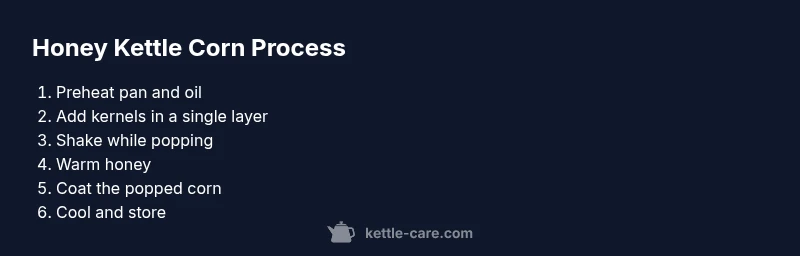
Preheat pan and oil
Place a heavy-bottom skillet on medium heat and swirl in 2–3 tablespoons of neutral oil until it shimmers. This primes the surface for even popping and prevents kernels from sticking.
Tip: A shimmering oil coat helps kernels pop more evenly; if oil smokes, remove from heat briefly and reduce temperature. - 2
Add kernels in a single layer
Pour 1/3 cup popcorn kernels into the pan in a single, even layer. Immediately cover with the lid to trap heat and start the popping.
Tip: Spread kernels out as much as possible for uniform popping; avoid crowding to prevent steam buildup. - 3
Shake while popping
Gently shake the pan every 15–20 seconds to prevent scorching and ensure even heat distribution as kernels begin to pop.
Tip: Hold the handle with a heat-resistant glove to avoid steam burns. - 4
Warm the honey
In a small saucepan, warm 2–3 tablespoons honey just until runny. Do not boil; overheating can separate flavors and darken the coating.
Tip: A thin honey flow coats popcorn more evenly; if thick, whisk in a tiny amount of hot water to loosen. - 5
Coat the popped corn
When popping slows (do not remove the pan too early), remove from heat and drizzle the honey evenly over the hot kernels. Toss quickly to coat.
Tip: Add a pinch of salt to balance sweetness if desired; more coating time yields crisper texture. - 6
Cool and separate
Spread the coated popcorn on a parchment-lined tray and let it cool completely to set the coating. Break apart any clumps by hand as needed.
Tip: Cooling is essential for crisp texture; avoid stacking when warm to prevent soggy spots.
Frequently Asked Questions
Can I use sugar instead of honey for kettle corn?
Yes, you can use sugar, but the texture and flavor differ from honey. Sugar caramelizes differently and may require adjustments in heat and timing. Honey adds moisture and a distinct floral note that many people enjoy with popcorn.
You can use sugar, but expect different texture and flavor; honey gives moisture and a gentle floral sweetness.
What is the best pan for honey-coated kettle corn?
A heavy-bottom skillet or Dutch oven is best for even heat distribution and to reduce scorching. A wide, shallow pan helps coat kernels more evenly as you stir.
Use a heavy skillet for even heat and easier coating.
How long does honey-coated kettle corn stay fresh?
When stored properly in an airtight container away from humidity, it stays crisp for several days. For best texture, re-crisp in a low oven for a few minutes if it softens.
Stored properly, it stays crisp for a few days; re-crisp in a low oven if needed.
Can I skip oil when making kettle corn with honey?
Oil helps heat transfer and prevents kernels from sticking. If you skip oil, you risk uneven popping and a harsher texture. A small amount is recommended.
Skipping oil can cause uneven popping; use a little oil for best results.
Is it possible to microwave honey kettle corn?
Microwaving is not ideal for this method because it can yield uneven coating and soggy texture. Stovetop popping gives the best control over heat and moisture.
Microwave isn’t ideal here; stovetop gives better control.
Can I add spices with honey?
Yes—cinnamon, vanilla, or a pinch of chili powder can enhance depth. Add spices to the honey before warming to ensure even distribution.
Spices like cinnamon or vanilla work well; mix them into warm honey.
Watch Video
Highlights
- Honey can replace part of the sugar for kettle corn flavor.
- Control heat and stirring to prevent scorching.
- Cool fully to maintain crisp texture.
- Experiment with flavor twists using spices or citrus zest.
- Store properly to retain crunch.