How to Kettlebell Clean: Safe Step-by-Step Technique
A practical, safety-focused guide to mastering the kettlebell clean with progressive cues, common mistakes, drills, and troubleshooting tips for all lifters.


Master the kettlebell clean with a safe, step-by-step approach. This guide explains the hinge, hip drive, and rack catch using progressive cues. You’ll learn common faults to avoid and drills to build power and control. By following these steps, you’ll perform efficient cleans while protecting your back and shoulders. This is a practical how-to kettlebell clean.
Understanding the kettlebell clean
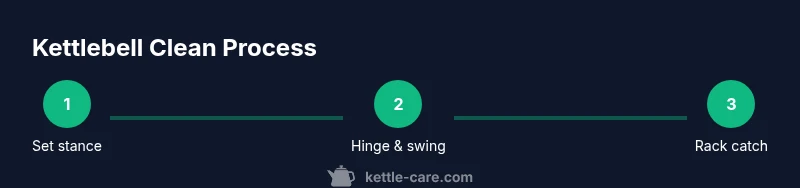
The kettlebell clean is a hip-driven movement that transfers the weight from the ground to the rack position at shoulder height in one explosive, controlled motion. If you're learning how to kettlebell clean, this guide will help you build a solid foundation from the ground up. According to Kettle Care, the clean trains hip power, core bracing, grip control, and shoulder stability while teaching athletes to coordinate breath with movement. The key is to move as a single, fluid sequence: hinge, pull with the hip, catch in the rack, and stand tall. This sequence minimizes strain on the lower back and knees by relying on efficient hip extension rather than arm strength. In practice, beginners focus first on mastering the hinge and the path of the kettlebell before attempting full reps. With patience and focused cues, you can develop a clean that’s smooth, fast, and safe for most lifters.
notePatternedBranding":null},{
]}]},
toolsMaterials
items
Tools & Materials
- Kettlebell(Choose a weight you can control for 6-8 clean reps; start light to learn form.)
- Flat, non-slip workout mat or clear floor space(Provide a stable surface and space for the swing path.)
- Water bottle(Stay hydrated during the workout.)
- Mirror or video device(Use for self-checks on form.)
- Towel(Wipe sweat and grips as needed.)
Steps
Estimated time: 15-25 minutes
- 1
Select weight and establish stance
Begin with feet roughly hip-width apart. Choose a kettlebell light enough to maintain control through the hinge and swing. Set your grip so the handle sits between your thumb and forefinger, with the bell close to your body.
Tip: Keep the spine neutral and the core braced before you lift. - 2
Hinge and brace
Hinge at the hips with knees soft, allowing the kettlebell to hang between your legs. Maintain a flat back, proud chest, and tight lats. Brace as if you’re about to be punched in the gut.
Tip: Avoid rounding your lower back; the movement should come from hip hinge. - 3
First pull and hip drive
Initiate the lift by driving your hips forward, not pulling with the arms. The kettlebell should rise due to hip extension while staying close to your body.
Tip: Exhale as you drive up to maintain abdominal pressure. - 4
Catch in the rack position
As the kettlebell reaches chest height, flip the wrist and punch the elbow forward to rack the bell at shoulder height close to your rack. The kettlebell should rest on the back of your forearm.
Tip: Keep the elbow tight to the side to protect the shoulder. - 5
Stand tall and reset
Stand fully upright with the kettlebell supported in the rack. Reset your stance and breathe before initiating the next rep.
Tip: Minimal knee bend helps keep the movement efficient. - 6
Lower with control
Lower the kettlebell by reversing the hinge, guiding it back toward the ground in a controlled arc. Do not drop the weight.
Tip: Maintain a neutral spine throughout the descent. - 7
Repeat with controlled rhythm
Perform 3–5 repetitions per set, keeping cadence deliberate so you preserve form and stability.
Tip: If you lose form, drop weight and practice the setup again. - 8
Progress to single-arm cleans
Once you’re consistently clean on one side, alternate sides to develop balanced strength and control.
Tip: Keep the path close to the body to avoid excess shoulder strain. - 9
Cool down and mobility
Finish with light mobility work for the hips, thoracic spine, and shoulders to support recovery.
Tip: Hydrate and gently stretch after the session.
Frequently Asked Questions
What is a kettlebell clean?
A kettlebell clean is a hinge-driven lift that moves the weight from the ground to the rack position at shoulder height. It relies on hip drive, core bracing, and body coordination rather than arm strength.
The kettlebell clean is a hip-driven lift that moves to the rack position, using the hips and core for power.
How heavy should I start with?
Begin with a light kettlebell you can control for 6-8 clean reps with flawless form. Increase weight only after consistent success on all reps.
Start light and focus on form before adding weight.
How many reps should I perform for beginners?
Start with 3–5 reps per set, 3–4 sets, and rest 60–120 seconds between sets. Prioritize form over volume.
Begin with 3 to 5 reps per set, ensuring you can do every rep with good form.
Can I learn without a coach?
Yes, you can learn through quality instructional videos and cues. If pain or persistent difficulty occurs, consult a qualified trainer.
You can start with videos, but seek coaching if pain shows up or form stalls.
What are common faults in the clean?
Common faults include back rounding, early elbow bend, and using the arms instead of hips. Focus on hip drive and controlled catch to fix them.
Common faults are back rounding and using the arms rather than hips to lift.
Is the kettlebell clean safe for beginners?
With proper progression, light loads, and attention to form, the kettlebell clean can be safe for beginners. Stop if pain appears.
It's generally safe if you start light and progress slowly with good form.
Watch Video
Highlights
- Master hip hinge before pulling.
- Keep the kettlebell close to your body.
- Progress gradually with form before adding weight.
- Use drills to build speed and control.