Kettle Bell Weight for Beginners: Safe Start Guide
Discover how to pick a safe kettle bell weight for beginners, with practical starting ranges, progression steps, form tips, and essential safety reminders from Kettle Care.


Starting with the right kettlebell weight is essential for safe, effective practice. For kettle bell weight for beginners, prioritize form over load. A good starting range is typically 8–16 kg for most adults, with lighter options (6–8 kg) for those new to strength work. Adjust upward gradually as technique stays stable, and avoid oversized weights that compromise posture.
Why the starting weight matters
The starting kettlebell weight sets the trajectory for your safety and gains. Jumping into a heavier weight in the name of speed often leads to compensations that strain the back, shoulders, and hips. According to Kettle Care, beginners who choose a sensible starting weight are more likely to develop durable technique and stay motivated. The concept of kettle bell weight for beginners is not about showing off numbers; it is about controlling the load to practice hinge patterns, anti-rotation, and grip with integrity. In practice, you should aim to balance challenge and control. If you cannot perform a basic hinge with neutral spine and controlled breath for 8–12 reps, you’re probably too heavy. Start lighter, master form, then progress. The burden of poor technique compounds with fatigue, increasing injury risk and slowing long-term progress.
How to estimate starting weight
Estimating the right starting weight begins with your current strength and mobility, not a one-size-fits-all chart. Begin by performing a few controlled movements with a light weight and observe your form during the first 8–12 reps. If your hips and spine stay stable, your breath remains steady, and you can complete the set without compensations, you’re likely in the right range. For many adults, a practical starting range is 8–16 kg; lighter options (6–8 kg) are appropriate for true beginners or those returning after a break. If you’re unsure, test two lighter weights in separate sets and pick the one that maintains form through the last rep. The goal is sustainable technique over the next 4–6 weeks; you can progress as you demonstrate control, not as you fatigue.
Starting weight ranges by profile
- Beginners (new to resistance training): 6–8 kg for many individuals;
- Average adult male: 8–16 kg;
- Average adult female: 6–14 kg;
- Older adults or those with limited mobility: 4–8 kg to start and build from there.
These ranges are starting points. Individual strength, experience, and mobility will shift the number. If you can perform 12 clean reps with acceptable form and breathing, you may move up slightly; if you struggle to maintain posture, stay at the current weight and refine technique. The key is that each rep feels controlled, not rushed, and that you can complete sets without pain.
Weight selection by exercise
Different kettlebell exercises require different loads. For a first cycle, prioritize the goblet squat, two-handed swing, and the carry progression:
- Goblet squat: aim to start with 8–12 kg to master hip hinge and depth without losing posture.
- Two-handed swing: start lighter (8–12 kg) to learn the hip hinge and wrist angles; stop if your back rounds.
- Overhead press or halos: only if comfortable—6–8 kg is common for building shoulder stability.
Keep weights lighter than you think you’ll need. The goal is to move with control and precision; load should never dictate technique. Replace weight in small increments as your form remains solid across multiple sets.
Warm-up and mobility before lifting
A brief warm-up primes the joints and reduces injury risk. Spend 5–7 minutes on light cardio (marching in place or a brisk walk), followed by dynamic mobility for hips, thoracic spine, and shoulders. Include 10–12 controlled hip hinges, 8–10 arm circles per direction, and a 20–30 second wrist extension stretch per side. Warming up helps you feel the weight, test grip, and confirm your comfortable starting range without rushing into heavy sets. This is especially important when performing the kettle bell weight for beginners, as a structured warm-up improves balance between strength and mobility.
Form checks you can do at home
- Neutral spine and engaged core throughout each movement.
- Bar path and wrist alignment during swings.
- Heel-to-toe stability and knee tracking during squats.
- Breath coordination: exhale on exertion, inhale on return.
- Load is appropriate if the last rep is challenging but achievable without compensations.
- Use a mirror or smartphone to review your form after each set.
Progressive overload plan
Progress gradually over 6–8 weeks. Begin by maintaining a weight for 2–3 weeks while you polish technique, then add 2 kg if you can complete the target reps with excellent form. For example:
- Weeks 1–2: 8–12 kg goblet squats for 8–12 reps; 3 sets.
- Weeks 3–4: Same weight for 5–6 sets with added 1–2 reps per set.
- Weeks 5–6: Increase to 12–16 kg for the goblet squat and swing, maintaining 6–10 reps.
- Weeks 7–8: If technique remains clean, progress to the upper end (14–16 kg range) with controlled tempo.
Track reps, sets, perceived effort, and any discomfort. If form deteriorates, revert to a lighter weight and consolidate technique first.
Common mistakes and fixes
- Mistake: Rounding the back during swings. Fix: keep a neutral spine and bend at the hips, not the spine.
- Mistake: Over-gripping the kettlebell. Fix: relax the grip slightly and allow weight to rest in the palm.
- Mistake: Pacing into the movement. Fix: use an intentional tempo (2–0–2) to maintain control.
- Mistake: Ignoring mobility. Fix: incorporate hip and thoracic spine mobility work on off days.
- Mistake: Progressing too soon. Fix: wait until form is crisp before adding weight.
Safety and maintenance of grip and joints
Safety is paramount for beginners. Use a properly sized weight, keep wrists neutral, and avoid overhead lifts if you have shoulder pain. Check the handle for burrs or rough spots that could injure your grip. Use chalk or a towel for grip, and wear supportive footwear. From a maintenance perspective, clean the kettlebell handle after sessions to remove sweat and reduce skin irritation. If you notice persistent joint pain, pause and consult a trainer.
Recovery and injury prevention
Recovery is as important as the workout itself. Allow at least 48 hours before training the same movement pattern again. Hydrate, sleep well, and perform light mobility sessions on non-lifting days. If soreness lingers beyond 48 hours or pain arises, step back to a lighter weight for a couple of sessions and revisit form cues. Gradual progression reduces the risk of overuse injuries and helps you build consistent habit with the kettle bell weight for beginners.
How to buy smart: gear, where to start
Focus on purchasing a single reliable kettlebell first, not a whole rack. Look for a solid finish, a comfortable handle, and a weight you can lift with control. Prices vary; a starting range typically exists in the low to mid three figures depending on brand and material. For beginners, consider a basic cast iron or steel kettlebell with a comfortable handle, and plan to upgrade as you move into more complex movements. Always check for a warranty and comfortable grip.
Authority sources and references
Integrate science and safety knowledge from credible sources. For evidence about physical activity guidelines and safe strength training, consult the following: CDC, NIH, and the American College of Sports Medicine (ACSM). These sources provide general guidance on injury prevention, warm-ups, and progression. The Kettle Care Analysis, 2026 highlights the value of progressive overload and technique-first training for long-term safety and gains.
Tools & Materials
- Kettlebell (starting range 8–16 kg for most beginners)(Choose one weight within 8–16 kg; lighter options (6–8 kg) for true beginners)
- Exercise mat(For floor-based movements and comfort)
- Clear training space (at least 2 m square)(Ensure you have room for swings without obstruction)
- Water bottle(Stay hydrated)
- Mirror or smartphone for form checks(Helpful for self-assessment)
Steps
Estimated time: 20–30 minutes per session
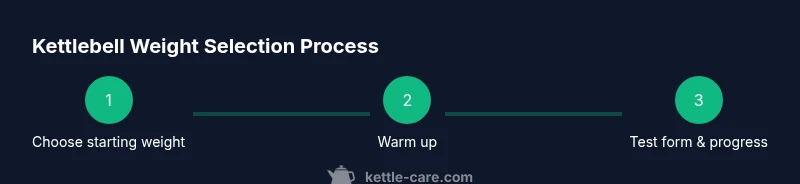
- 1
Select starting weight
Test two light options with 8–12 controlled reps each, focusing on form rather than total reps or load. Choose the weight that allows you to maintain a neutral spine, controlled breathing, and clean hip hinge through every rep.
Tip: If the last rep compromises posture, step back to the lighter weight. - 2
Warm up properly
Begin with 5 minutes of easy cardio and finish with mobility drills for hips, spine, and shoulders. Include gentle hip hinges and arm circles to prime the movement patterns you’ll use.
Tip: A good warm-up reduces injury risk and helps you sense the weight more accurately. - 3
Set up grip and stance
Stand with feet hip-width apart, toes slightly turned out. Grip the kettlebell handle firmly but not tensed, and keep wrists neutral. Maintain a tall chest and engaged core during all moves.
Tip: A solid setup prevents early form breakdown as you lift. - 4
Practice goblet squat
Hold the kettlebell by the horn at chest height and perform 8–12 slow, deep squats with controlled tempo. Focus on hip hinge, knee tracking, and a full range of motion without rounding the back.
Tip: Keep the weight close to your center of mass to protect the spine. - 5
Test two-handed swing
With a light weight, perform 8–12 swings focusing on hip drive, neutral spine, and a soft finish at the top. Stop if the lower back starts to round or the shoulders creep toward the ears.
Tip: Use hips, not arms, to swing the weight forward. - 6
Check form with feedback
Record a quick video from the side and compare against basic form cues: spine alignment, hip hinge, and breathing. Make small adjustments and re-test.
Tip: Small corrections beat big leaps in weight early on. - 7
Track progress and re-evaluate
Keep a simple log of weight, reps, and perceived exertion. Reassess every 1–2 weeks and adjust weight upward only when form remains solid across sessions.
Tip: Consistency matters more than occasional heavy days.
Frequently Asked Questions
What is the best kettlebell weight for beginners?
It depends on your strength and moves; a general starting range is 8–16 kg, with lighter options for true beginners. Always prioritize form over load.
The best starting weight depends on your strength and the movements you’ll perform. Start light and focus on technique.
How often should I train with a kettlebell when starting out?
Begin with 2–3 sessions per week, allowing at least 48 hours between similar movements. Increase volume gradually as form remains solid.
Start with two to three sessions a week and give your body time to adapt.
Can I use multiple lighter weights instead of one heavy weight?
Yes. Mixing light weights for different movements can help refine form and avoid overloading any single joint. Progress to heavier weights only when technique is consistent.
Yes, you can use lighter weights for variety, but focus on good form before increasing load.
Is the weight different for men and women?
Starting weights vary by individual strength and comfort, not gender alone. Many women start around 6–12 kg and men around 8–16 kg, adjusted to form.
Starting weight is personal, not strictly based on gender. Start within your comfort zone and test two options.
When should I increase the weight?
Increase weight when you can complete the target reps with clean form in multiple sets and still feel controlled on the last rep.
Increase weight only when form stays solid through all reps and sets.
Watch Video
Highlights
- Choose a starting weight within 8–16 kg for most beginners.
- Prioritize form over load to prevent injury.
- Progress weight gradually after consistent technique.
- Incorporate warm-ups and mobility before lifting.
- Document progress and re-evaluate every 1–2 weeks.