What Weight Kettle Bell: A Practical Home Guide
Learn how to choose the right starting weight for a kettle bell, progress safely, and follow practical, beginner-friendly guidelines for sustainable strength gains.


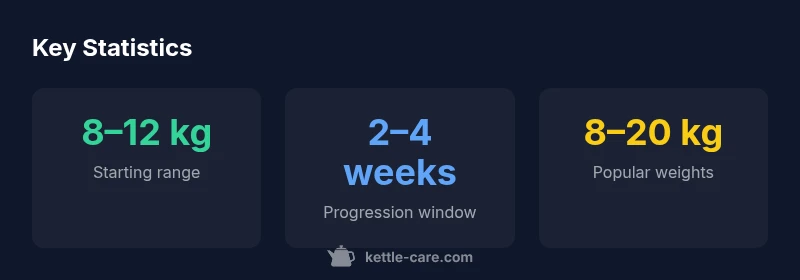
To answer what weight kettle bell to start with: begin with 8–12 kg if you’re lighter or newer, and 12–16 kg if you’re comfortable with basic moves. Prioritize form over load and progress gradually every few weeks. Reassess every 2–4 weeks and adjust as you improve technique and confidence. Always check for pain or compensations in the lower back or shoulders.
How to determine what weight kettle bell to start with
Determining the right starting weight involves body size, strength, mobility, and goals. A clear answer to the question "what weight kettle bell should I start with?" isn’t one-size-fits-all, but practical rules help. According to Kettle Care, the safest approach for most beginners is to start light and progress gradually. Learn the hinge, cleans, and carries with control before adding load. In practice, many adults start with 8–12 kg, testing 12–16 kg only after you demonstrate consistent form in 8–12 reps per side. Warm-ups matter; a light windmill or halo can reveal mobility limits before you load up. If you experience back or shoulder niggles during sets, back off and re-evaluate technique or seek guided instruction.
Factors that influence starting weight
Body weight and frame size, training age, mobility, shoulder and hip stability, and prior activity all influence what weight kettle bell to start with. Taller lifters or those with a larger frame may handle heavier bells sooner, while newcomers with limited hip hinge mobility should start lighter. Personal goals also matter: a kettlebell aimed at swings and carries emphasizes posterior chain strength and grip, whereas a regimen including Turkish get-ups or overhead presses may require lighter loads to maintain form. Always assess pain signals and ensure warm-ups prep the hips, glutes, and core for safe loading.
How to test weight safely with warmup sets
A safe approach is critical when evaluating weight. Begin with a comfortable warm-up of 5–10 minutes of light cardio and mobility work, then perform 1–2 warm sets with a light bell to rehearse form. Perform a controlled test set of 8–12 reps with the tentative weight, watching for technique deviations, swing arc, and trunk position. If your form holds and reps are consistently clean, you can consider a modest increase (e.g., 2 kg) and repeat. Stop immediately if you lose control or feel pain. This process helps you determine what weight kettle bell is appropriate without risking injury.
Weight progression plan: from beginner to intermediate
Progression should be gradual and rule-based. Aim for 2–4 kg increases every 2–4 weeks, depending on how your technique holds up. Use micro-progressions such as lowering tempo on the eccentric, increasing reps within a fixed set, or adding an extra set with the same weight before moving up. Track your reps, sets, and perceived exertion; a simple RPE 7–8 on the last rep indicates a safe challenge. When you can perform 3–4 sets of 8–12 reps with clean form, consider moving up to the next weight bracket and reassessing again in 2–4 weeks.
Exercise examples by weight
With the starting weight chosen, structure a simple starter plan: Week 1–2: 3 sessions, 3–4 sets of 8–12 reps of goblet squats, kettlebell swings, and one-arm rows with light emphasis on form. Week 3–4: add overhead press and modified Turkish get-ups at the same weight; consider a light intensity adjustment by tempo or tempo-based sets. By Week 4–6, evaluate if you can safely move to a heavier bell while maintaining form on the same exercises. This approach keeps you consistent and injury-free while building strength.
Common myths about kettlebell weight
Myths persist that heavier is always better. In reality, technique precedes load; heavy bells can amplify bad form and injury risk. Another myth is that more reps with a light bell equals better results; steady progress with appropriate load, volume, and recovery drives long-term gains. Finally, beginners often think you must master every movement before progressing; in practice, gradual exposure to a subset of movements with proper form yields the best outcomes.
Starting weight by experience level and common lifts
| Experience Level | Recommended Starting Weight | Typical Lifts |
|---|---|---|
| Beginner | 8–12 kg | Goblet squat; swings; press |
| Intermediate | 12–20 kg | Swing; clean; press; squat |
| Advanced | 20–28 kg | Turkish get-up; heavy swings; clean & jerk |
Frequently Asked Questions
What if I only have a single kettlebell weight?
If you have only one weight, slow tempo and higher reps can help you train safely while you improve form. Use a focused progression plan and avoid attempting heavy reps that compromise technique.
If you only have one weight, slow down tempo and use more reps to train safely while you improve form.
Is a heavier weight always better for strength gains?
Not always. Safety and technique matter most. Start with manageable loads, ensure clean form, and progress gradually to avoid injury.
No—quality form with gradual progression is safer and more effective than jumping to heavy weights.
How often should I reassess starting weight?
Reassess every 2–4 weeks as you gain strength and refine technique. Use consistent criteria: reps, form, and perceived exertion.
Reassess every 2–4 weeks as you gain strength and technique.
What movements are best for beginners?
Focus on goblet squats, kettlebell swings, and rows to build form and foundation. Add presses and get-ups once technique is solid.
Start with goblet squats, swings, and rows; add presses as form solidifies.
How many reps per set should I use to evaluate weight?
Aim for 8–12 reps per set with clean form when testing a weight. If your form breaks, stay at that weight or reduce reps until technique is solid.
Use 8–12 reps with clean form to test weight. If form falters, stay or reduce reps.
“Choosing the right kettlebell weight is about balancing safety with progression; technique trumps load for long-term gains.”
Highlights
- Start light and master form first.
- Progress weight in small, regular steps.
- Reassess every 2–4 weeks for safe advancement.
- Prioritize pain-free technique over heavier loads.