Kettlebell Weight for Beginners Female: A Safe Starter Guide
Learn the recommended starting kettlebell weights for women new to training, how to test weight safely, and a practical 6-week plan to build strength with proper form.


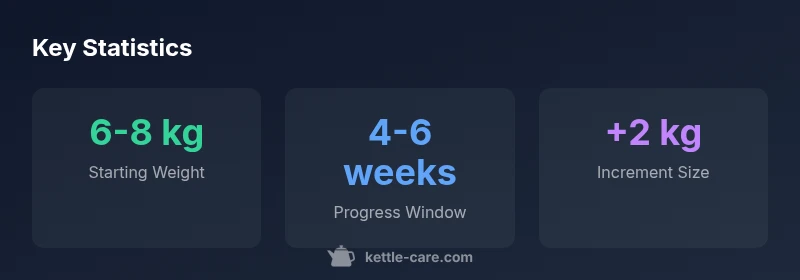
For the kettlebell weight for beginners female, start with 6 kg if you’re new to resistance training, or 8 kg if you already train lightly. Most beginners progress to 8–12 kg within 4–6 weeks, and 12–16 kg as you gain confidence. Always prioritize form over heavier weights.
Understanding Why Weight Matters for Beginners
According to Kettle Care, choosing the right kettlebell weight is foundational for long-term safety and progress. The goal for beginners is to learn optimal movement patterns first, then progressively load the muscles to stimulate strength gains. Using too heavy a weight without proper form can compromise the spine, pelvic floor, and shoulders, especially for beginners with limited mobility or prior activity gaps. A measured approach helps you establish consistent technique, which translates into faster, safer progress as you advance to heavier loads. In addition to strength, kettlebell training improves coordination, core stability, and posture—benefits that compound when you scale weight gradually and maintain attentive control over each rep. Your starting point should feel challenging but controllable for 8–12 slow, deliberate reps per exercise, with a focus on a neutral spine and clean breathing.
How to Choose Your Starting Weight (Female Beginners)
Selecting the right starting weight is a practical, data-informed decision. The most common starting ranges for women new to kettlebell work are 6-8 kg for absolute beginners and 8-12 kg for those with some prior weight or resistance training experience. When testing a weight, perform 8–12 controlled repetitions of foundational moves like goblet squats and kettlebell deadlifts. If you struggle to complete reps with good form, your weight is likely too heavy. If you complete reps easily and still don’t feel challenged by the last two, you can consider going up by about 2 kg. Always prioritize form—keep your core engaged, hips in line, and shoulders packed during each rep. Because mobility and joint health vary, start lighter and monitor your form for several workouts before increasing.
Gender Differences: Safety and Form Priorities
Women may experience different fatigue and mobility patterns due to anatomy and training history. Safety first means focusing on core stability, hip hinge mechanics, and scapular retraction before adding load. Slow, deliberate progression reduces risk of strain in the lower back and knees. If you have a history of pelvic floor concerns or diastasis, consult a qualified coach and tailor weight progression accordingly. Regular mobility work—hamstring, hip flexor, thoracic spine—complements strength gains and helps you lift safely at higher weights later on.
A Progressive 6-Week Plan to Build Confidence
Week 1–2: Choose 6–8 kg; master goblet squats, two-handed swings, and carries with a solid form. Week 3–4: Move to 8 kg if form remains solid and speed is controlled; add a light overhead press. Week 5–6: Test 10–12 kg (if you’ve maintained technique and pain-free movement). By week 6, many women move toward 12 kg, depending on comfort and proficiency. The plan emphasizes form first and weight second, with a focus on 2–3 full-body kettlebell sessions weekly.
Essential Exercises and How Weight Impacts Form
Key moves for beginners include goblet squats, swings, Romanian deadlifts, and overhead presses. Start with light loads to learn hip hinge, core bracing, and wrist alignment. As you gain confidence, small weight increments help improve muscle recruitment without sacrificing form. For example, when performing kettlebell swings, your hips, glutes, and hamstrings should drive the movement, not the arms. With each upgrade, reassess technique and breathing to ensure you’re not compensating with the spine or shoulders.
Common Mistakes to Avoid and How to Adjust
Avoid over-reliance on the arms, rounding the back, or chasing speed over control. If you notice any pain, buckle or poor alignment, drop the weight by 2 kg and revisit form cues. Pay attention to grip security, wrist neutrality, and knee tracking during squats and presses. When progression stalls, reset with a lighter weight and focus on tempo (pause at the bottom, controlled ascent) before attempting to add load again.
Long-Term Habits: Track, Recover, and Reassess
Maintain a simple log of weights used, repetitions, and any perceived difficulty. Use a 24–48 hour recovery window between heavy sessions to allow connective tissue to adapt. Periodically reassess your starting weight using a standard test: complete 8–12 reps with excellent form, then re-check after 4–6 weeks to ensure you’re still in the correct weight range. Listening to your body and adhering to a progressive schedule helps sustain gains and reduces injury risk.
Starting weight recommendations and progress triggers
| Aspect | Starting Weight | Progress Trigger |
|---|---|---|
| Absolute beginner | 6-8 kg | Form above all else; progress after 4-6 weeks |
| General novice | 8-12 kg | Can perform 12–15 reps with control |
| Advanced beginner | 12-16 kg | Consistency for 4+ weeks with good technique |
Frequently Asked Questions
What is a good starting kettlebell weight for women?
A common starting range is 6-8 kg for absolute beginners or 8-12 kg for those with some training background. Choose a weight that lets you complete 8-12 controlled repetitions with perfect form, then reassess after 4–6 weeks.
Start with 6 to 8 kilograms, or 8 to 12 kilograms if you have some training background; prioritize form and reassess after a few weeks.
How do I test if a weight is too heavy?
If you cannot complete 8–12 reps with clean form and controlled tempo, the weight is too heavy. There should be no rounding of the back, jerking, or grip failure. Lower the weight and rebuild technique.
If you can't do 8 to 12 reps with good form, pick a lighter weight and focus on technique.
Should I buy multiple weights or a single weight?
Starting with one weight is common, then gradually adding a second weight as you progress. A two-weight setup (e.g., 8 kg and 12 kg) covers a broad range for most beginners. Avoid buying too many options at once to stay focused on technique.
Many beginners start with two weights and add as they progress.
How soon can I expect strength gains?
Most beginners notice improvements in strength and technique within 4–8 weeks when training consistently with proper form and progressive loading. Ensure adequate recovery and mobility work to support gains.
Expect early strength gains in about 1–2 months with consistency.
Are there safety considerations for beginners?
Yes. Prioritize warm-ups, diaphragmatic breathing, and core engagement. Focus on hip hinge mechanics and shoulder stability. If you have a history of back or pelvic floor issues, consult a qualified coach before increasing weight.
Warm up well, master hip hinge, and watch for any discomfort; consult a coach if in doubt.
“Form and control must come before weight. Progression should be deliberate, not rushed.”
Highlights
- Start light to master form before loading up.
- Common starting ranges for women beginners are 6-8 kg or 8-12 kg.
- Progress weight by roughly 2 kg every 4-6 weeks as technique stabilizes.
- Prioritize mobility work to support stronger, safer lifts.
- Track reps, sets, and form to guide progression over time.