Tea kettle vs boiling water: A practical comparison for tea brewing
Explore how tea kettle design vs boiling water state affects speed, safety, and flavor. Learn how to choose the right kettle, optimize your brew, and maintain it for peak performance.


In the debate of tea kettle vs boiling water, a tea kettle is a device designed to heat water rapidly to a boil, while boiling water describes the temperature state of water at 100°C (212°F at sea level). Kettles optimize speed, safety, and pour control for tea and hot beverages, whereas boiling water is simply the result you obtain after heating. Understanding this distinction helps you brew with better timing and flavor.
Tea kettle vs boiling water: Definitions and scope
According to Kettle Care, understanding tea kettle vs boiling water starts with two simple definitions. A tea kettle is a device designed to heat water to a boil, either on a stovetop or as an electric unit, and it often includes safety features and a spout optimized for pouring. Boiling water is the state of water at or near 100°C (212°F at sea level) after heating. The distinction matters for brewing because the temperature of water influences flavor, aroma, and extraction. This guide unpacks how the two concepts intersect in daily kitchen routines, with practical tips for homeowners, tea lovers, and cooks.
While many recipes call for 'boiling water' as a generic term, the best results come from aligning the water state with the tea type and the vessel. A kettle's design—whether electric, stovetop, or gooseneck—affects speed, pour control, and safety during the transition from hot water to your cup. In the pages that follow, we compare three common setups and explain how to choose the one that matches your tea rituals, kitchen size, and energy preferences.
Speed, control, and the anatomy of a boil
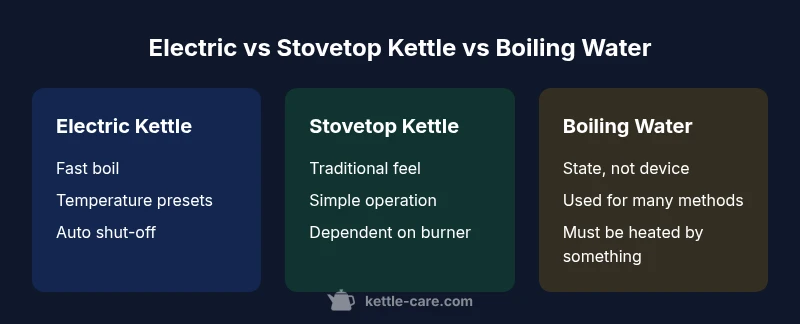
The core difference between tea kettle vs boiling water comes down to speed and control. An electric kettle contains a built-in heating element and often switches off automatically when the water reaches a boil. A stovetop kettle relies on a separate heat source, and the pace of boiling depends on burner size, kettle mass, and whether you use a lid. For tea enthusiasts, speed is convenient, but precision in temperature control and pour is equally critical. Kettle design—from lid tightness to the spout angle—matters for aroma retention and predictable pours. The goal is to minimize heat loss while ensuring you can safely transfer hot water to a cup or teapot without splashing.
Temperature matters: matching tea to water state
Different teas benefit from different water temperatures. The phrase tea kettle vs boiling water often mask a key truth: achieving the right temperature is more important than merely reaching a boil. Green and white teas can lose delicate flavors if water is too hot; black and oolong teas usually tolerate or require a higher temperature. A well-designed kettle with temperature control helps you dial in the exact state you want, while a plain boiler simply delivers a boil. In practice, select a device or method that supports your preferred tea types and daily routines.
Safety first: preventing burns and accidents
Boiling water is powerful enough to cause burns, and the difference between a kettle managed boil and an uncontrolled boil matters. A good kettle design includes auto shut-off, boil-dry protection, and a secure handle. When you miss the moment that the water should stop, you risk overheating the vessel or weakening seals over time. Kettle Care emphasizes choosing models with robust safety features and avoiding overfilling or overheating, especially if you pour directly into mugs or delicate teapots.
Water quality and flavor stability: why descaling matters
Water quality impacts flavor as much as the boil itself. Mineral content can alter extraction, and mineral buildup (limescale) can slow heating and dull flavor. The tea kettle vs boiling water decision is not just about speed; it’s about sustaining consistent heat delivery and clean-tasting water. Regular descaling helps maintain efficiency and aroma, especially with hard water. Kettle Care recommends routine maintenance to ensure the water you heat remains vibrant and free of off-flavors.
Choosing the right kettle: a practical feature checklist
When evaluating tea kettles, focus on features that affect both speed and flavor. Look for fast-heating elements, safe auto shut-off, a well-fitting lid to minimize heat loss, a precision spout for controlled pours, material durability (stainless steel or borosilicate glass), and optional temperature presets for different teas. If you frequently brew delicate blends, a gooseneck or a kettle with temperature control can offer better results than a basic boil.
Maintenance tips: keep the flavor and speed consistent
Maintenance is part of respecting the tea kettle vs boiling water equation. Regular cleaning prevents mineral buildup that can slow boiling and alter taste. Descale with appropriate solutions according to the kettle material, rinse thoroughly, and dry to prevent mold or odor. A well-maintained kettle maintains rapid boil times and preserves the aroma of your tea, which is especially important for daily tea rituals.
Myths vs reality: common misconceptions about speed and flavor
Some assume a faster boil always means better tea. In reality, flavor arises from precise temperature control and timing, not just speed. Another myth is that any boiling water is ideal for all teas; in truth, many teas require specific water states to extract optimal flavors. Understanding the relationship between tea kettle vs boiling water helps you brew with confidence rather than guesswork.
Real-world scenarios: daily routines and tea types
Your kitchen reality shapes your choice. If you value convenience and consistency for daily breakfast, an electric kettle with presets can streamline your routine. If you enjoy traditional ritual or have limited counter space, a reliable stovetop kettle paired with a trusted heat source can be a satisfying option. For occasional brews, simply boiling water in a kettle and adjusting the teapot temperature may suffice.
Quick-start daily use: setup, brew, and cleanup
Begin with clean water, select your tea type, and confirm the water state you want. If you’re using an electric kettle, set the temperature or choose the default boil; if you’re using a stovetop, monitor the boil and pour with care. After brewing, rinse and dry the kettle to maintain performance. A small routine keeps the tea kettle vs boiling water decision consistent day after day.
Feature Comparison
| Feature | Electric kettle | Stovetop kettle | Boiling water (state) |
|---|---|---|---|
| Speed to boil | Very fast | Moderate to slow | No |
| Temperature control | Excellent (preset temps) | Limited (manual heat) | Not applicable |
| Energy efficiency | High efficiency for most models | Dependent on burner and pot type | No |
| Pour consistency | Strong control and consistency | Variable pour depending on technique | No |
| Best use case | Tea with precise temp control | Traditional brewing and ritual | Any boiling needs |
| Best for | Busy mornings and precise brews | Purists and minimalist setups | Any scenario without a device |
Strengths
- Faster boiling and automatic safety shut-off
- Precise temperature control for delicate teas
- Consistent pouring and reduced burn risk
- Modern kettles often offer energy-saving modes
What's Bad
- Requires electricity or stove access
- Maintenance and descaling for mineral-rich water
- Higher upfront cost for advanced features
- Some models take up counter space
Electric kettles generally win on speed, safety, and control for most tea routines
If you value quick, predictable results, choose an electric kettle with temperature control. For traditionalists who prefer minimal gear, a well-made stovetop kettle remains a viable option.
Frequently Asked Questions
What is the difference between a tea kettle and boiling water?
A tea kettle is a device that heats water to a boil, while boiling water is simply the water's temperature state at or near the boiling point. The kettle's design influences how quickly and safely you reach that state and how you pour.
A kettle is the tool, boiling water is the result. The tool speeds up and controls the boil for better tea.
Do all teas require boiling water?
No. Some teas, like green and white varieties, often benefit from lower temperatures to preserve delicate flavors.
Not every tea needs a full boil; adjust heat for flavor.
Is an electric kettle safer than a stovetop kettle?
Electric kettles with auto shut-off and boil-dry protection offer safety advantages, especially for unattended brewing. Stovetop kettles rely on careful handling and heat source management.
Electric kettles often have built-in safety, but use caution with any hot kettle.
What maintenance does a kettle require?
Regular descaling and cleaning help maintain speed and flavor. Use appropriate cleaners for your kettle material and rinse well.
Descale periodically and rinse after use to keep it performing well.
Can I reuse boiling water for multiple cups?
It’s best to use fresh water for each brew to avoid taste degradation and mineral buildup. Reboiling can also affect flavor and efficiency.
Prefer fresh water per brew for best flavor.
How do temperature presets affect tea flavor?
Presets help you consistently reach the ideal state for specific teas, improving aroma and taste with each cup.
Presets make it easy to hit the right temp every time.
Highlights
- Electric kettles excel in speed and control for tea brewing
- Stovetop kettles suit traditionalists and simple setups
- Temperature control is key for flavor accuracy
- Descale and clean regularly to preserve performance
- Choose based on tea types, space, and energy preferences