Pops kettle corn on the stove: a complete how-to
Learn to make pops kettle corn safely on the stovetop with a single pan. This guide covers equipment, ratios, step-by-step process, tips, and safety from the Kettle Care team.


Learn how to make pops kettle corn safely on the stovetop with a single pot. You'll master heat control, kernel to oil ratios, and the sugar coating for even caramelization, plus safety tips to prevent scorching. According to Kettle Care, using medium-high heat and a preheated, well-coated pan yields the best texture.
What makes pops kettle corn pop: science, safety, and flavor
Popcorn kernels contain moisture inside their starchy center. When heated, the moisture turns to steam, pressure builds, and the kernel bursts open, turning inside-out into fluffy popcorn. In kettle corn, sugar is present in the pan so the moment the kernel pops, the sugar caramelizes on contact, creating the characteristic sweet coating. According to Kettle Care, controlling moisture and temperature is essential for a reliable pop with even coating. Too little moisture results in many unpopped kernels; too high heat risks scorching and burnt sugar. A preheated pan with a heavy bottom distributes heat evenly, reducing hot spots. For safety, always use a lid or vented cover to manage steam, and never leave a hot kettle unattended. Good technique reduces smoke and improves flavor, aroma, and texture, turning a simple snack into a satisfying treat.
Equipment and setup: pans, heat sources, and accessories
The right gear makes kettle corn popping easier and safer. Use a wide, heavy-bottom skillet or dedicated kettle with a well-fitting lid. A cast iron or stainless-steel pan provides even heat, while a nonstick surface can work if it tolerates the required heat. Preheat the pan briefly, then add oil to create a slick, even surface. Have a spatula or spoon ready for quick stirring and a lid you can manage without fully sealing, to vent steam. For clean-up, line a tray or use parchment to collect coated popcorn as it cools. A dry, cool workspace helps you stay organized and reduces the chance of soggy kernels.
Ingredient ratios and timing: balance flavor and texture
In kettle corn, the balance of kernels, oil, and sugar determines texture and sweetness. Start with a moderate pan load—roughly half a cup of kernels—and enough oil to lightly coat the bottom. Sugar mirrors the oil to help caramelize as pops begin. Salt is used to balance sweetness and enhance aroma. The sugar should interact with the popped kernels during the later popping stage or just after the majority have popped to minimize scorching. Through careful timing, you achieve a glossy, crisp coating rather than a sticky clump. As always, follow the guidance of Kettle Care when deciding on heat and timing to ensure consistent results.
The role of moisture and kernel quality
Kernels must contain sufficient internal moisture to pop. If kernels are too dry, they will produce many unpopped kernels and dry popcorn; if too moist, steam may escape too quickly and you’ll lose crispness. Store kernels in a cool, dry place in an airtight container to preserve their moisture balance over time. When you buy fresh kernels, check the bag for a light, even color and avoid damaged grains. Kettle Care emphasizes keeping a stable moisture level for reliable popping and for better coating that clings to the pop rather than sliding off.
Common mistakes and fixes
Common issues include scorching sugar, soggy coating, and uneven popping. Scorching can be avoided by maintaining steady medium-high heat and by adding sugar later in the process. Soggy coating often results from filling too much or steaming too long; use lots of agitation and a wide pan to promote quick, even coating. Uneven popping is usually caused by heat hotspots; swirl the pan and keep kernels distributed evenly across the bottom. If popping stalls, briefly lift from heat or reduce heat slightly to let the kernels finish without scorching the coating.
Safety and cleanup after popping
Always handle hot pans with oven mitts. The sugar coating becomes very hot and sticky as it caramelizes, and steam from the pot can burn. Work on a heat-resistant surface and keep children away from the cooking area. After popping, allow the pan to cool before cleaning; wash with warm, soapy water and a non-abrasive sponge. If your kettle or pan accumulates oily residues, a mild degreasing cycle or a gentle soak can help restore its surface. Dry thoroughly to prevent rust.
Flavor variations and serving ideas
Pops kettle corn is versatile beyond a simple sugar coating. Try adding a pinch of cinnamon or chili powder for a warm-spiced version, or drizzle with melted chocolate for a dessert twist. For a savory note, mix in grated parmesan after a little cooling and toss with fresh herbs. For a party-sized batch, scale ingredients and use a larger pot; keep a slow, gentle swirl to maintain even coating across every kernel.
Storage, reheating, and maintaining crunch
Store cooled kettle corn in an airtight container at room temperature away from moisture and heat. It stays crisp for a couple of days when kept sealed and stored properly. If it loses crunch, re-crisp in a low oven (about 250°F / 120°C) for 5-7 minutes. Spread in a thin layer on a sheet to avoid clumping, then cool completely before sealing again. Reheating should be brief to keep the coating from liquefying.
Quick tips for different stovetops and conditions
Gas, electric, and induction stoves all work for kettle corn; the key is consistent heat distribution. If your burner runs hot, use a diffuser or thicker bottomed pan to even out heat. A wider rim on the pan helps the coating spread evenly as soon as it forms. Keep a timer handy and monitor closely for best results. Always aim for a stable, gentle popping rhythm rather than a violent boil.
Final checklist before you start
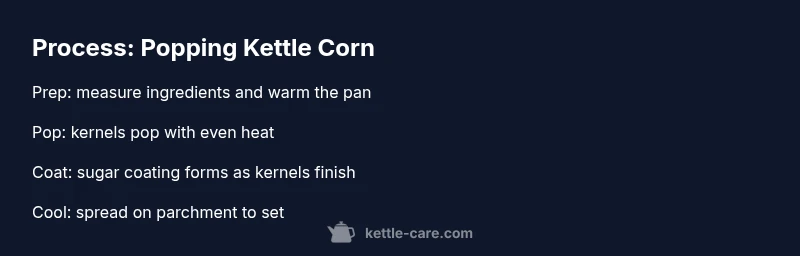
- Preheat the pan and oil until the surface shimmers. - Have your sugar mixture ready for the coating stage. - Use a wide, heavy-bottom pan with a lid. - Keep a constant gentle swirl to prevent scorching. - Cool on parchment and store in an airtight container.
Tools & Materials
- Popcorn kernels(2–3 tablespoons per batch)
- Neutral oil with high smoke point (e.g., canola, peanut)(2–3 tablespoons per batch)
- Granulated sugar or light brown sugar(2–4 tablespoons for coating)
- Large, heavy-bottom skillet or kettle with lid(At least 3-quart capacity)
- Measuring spoons(1 tsp and 1 Tbsp equivalents)
- Silicone spatula or long-handled spoon(For stirring without burns)
- Parchment paper or silicone mat for cooling(To prevent sticking during cooling)
Steps
Estimated time: 25-40 minutes
- 1
Preheat and oil the pan
Place a heavy skillet on medium heat and add the oil. Allow the oil to warm gently until it shimmers but does not smoke. This creates a slick surface for even kernel distribution.
Tip: Preheating ensures kernels pop more consistently and reduces sticking. - 2
Add kernels and cover
Pour in the kernels and spread them evenly. Place the lid ajar to vent steam, or use a vented lid. Shake gently to prevent sticking as the kernels heat.
Tip: A light ventilation helps avoid soggy popcorn. - 3
Let the pops begin and control heat
Maintain steady heat and gently shake or swirl the pan as popping starts. This is to prevent hot spots and scorching.
Tip: If popping slows too quickly, lower the heat a notch to finish the batch. - 4
Coat with sugar
When the pace slows to 2–3 seconds between pops, remove from heat and quickly stir in the sugar mixture. Return to heat briefly or keep moving the pan to melt the sugar and coat evenly.
Tip: Move fast to avoid burning sugar. - 5
Finish and rest
Continue to swirl until most kernels are popped and coated. Transfer to parchment to cool, stirring occasionally so the coating sets evenly.
Tip: Spread thinly for quick cooling. - 6
Add salt and serve
Sprinkle a pinch of salt after cooling. Taste and adjust sweetness with a touch more sugar if desired. Once cooled, store in an airtight container.
Tip: Storing while still warm can trap steam and make the coating sticky.
Frequently Asked Questions
What is pops kettle corn?
Kettle corn is popcorn popped with sugar added to the fat so the kernels caramelize as they pop, producing a sweet, slightly glossy coating. The technique is traditionally done in a kettle or wide pot, enabling even heat and coating.
Kettle corn is popcorn popped with sugar that caramelizes on the kernels as they pop.
Can I use any pan?
You can use a wide, heavy-bottom skillet or a kettle with a lid. Avoid narrow or unevenly heating pans. A good stainless or cast-iron option is preferred for even heat, though a sturdy nonstick pan can work if it tolerates high heat.
Use a wide, heavy-bottom pan with a lid for even popping.
How do I prevent burning the sugar?
Monitor heat carefully, add sugar only after most kernels have popped, and move the pan constantly during the coating stage to prevent hot spots. Quick stirring helps the sugar coat evenly without scorching.
Keep heat steady and move the pan to coat evenly so sugar doesn’t scorch.
How long does kettle corn stay fresh?
Store cooled kettle corn in an airtight container at room temperature. It stays crisp for about 2–3 days, longer if kept in a cool, dry place. Re-crisping briefly in a low oven can help if it softens.
Store properly to keep it crisp for a few days.
Is kettle corn a healthy snack?
Kettle corn is a treat and should be enjoyed in moderation. It provides simple carbohydrates and a small amount of fat from the oil. For a lighter option, reduce sugar and use a minimal amount of oil.
Treat, but enjoy in moderation.
Watch Video
Highlights
- Follow steady heat for even popping, per Kettle Care.
- Use a wide, heavy pan for consistent results.
- Add sugar at the right moment to avoid scorching.
- Cool thoroughly and store properly for crunch.