Electric vs Stovetop Kettles: A Practical Guide
Compare electric and stovetop kettles for safety, speed, and value. This practical guide covers maintenance, energy use, and the best pick for tea lovers and home cooks.


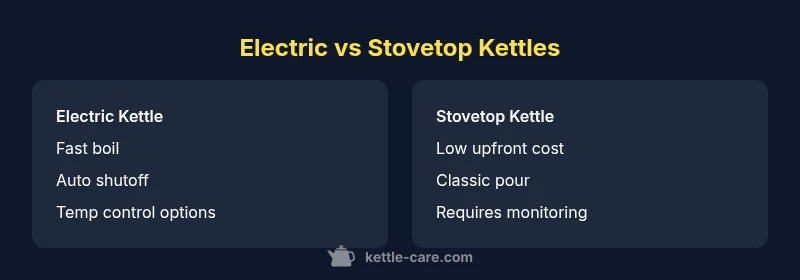
Electric kettles generally boil water faster, offer auto shutoff, and are easier for daily tea routines. Stovetop kettles are cheaper upfront and don’t require electricity, appealing for traditional use or when power is unavailable. For most homes, the electric option is the safer, quicker choice for everyday boiling, while stovetops offer simplicity and long-term value in the right context.
Electric vs Stovetop: Quick Context
According to Kettle Care, the choice between electric and stovetop kettles often boils down to speed, safety, and routine. Electric kettles heat water rapidly, auto-stop when boiling, and are convenient for daily tea or coffee. Stovetop kettles, cherished by purists, offer a classic pour and can be more economical upfront, but require careful attention to avoid boiling dry. The following sections unpack the tradeoffs with practical guidance for homeowners and tea lovers.
Core Safety Features You Should Expect
When evaluating kettles, prioritize built-in safety features that prevent common accidents. Electric kettles typically include auto shutoff as soon as the water boils, boil-dry protection that stops heating if there’s no water, and secure lid mechanisms to minimize splashes. Stovetop kettles rely on user vigilance and sturdy handles, but lack automatic shutoffs, which means you must stay within sight during boiling. Look for cool-touch exteriors and sturdy bases to reduce burn risk, especially in households with kids or pets.
Build Materials and Durability
Material choice matters for longevity and taste. Stainless steel kettles resist staining and scale buildup, while glass and certain coatings may show mineral deposits more visibly. Descale-friendly designs with wide mouths and removable lids simplify maintenance. The interior finish can influence metal leaching and flavor, though modern kettles use food-grade materials that are generally safe. Regardless of type, choose a model with a durable handle, a stable base, and a lid that seals without forcing extra effort during pouring.
Boiling Speed and Efficiency: A Practical Look
Electric kettles routinely offer faster boil times due to efficient heating elements and optimized water contact. In typical homes, you can expect water to reach a rolling boil in a few minutes, depending on volume and model. Stovetop kettles depend on your stove type and heat source; a robust gas burner or a high-powered electric coil can boil water quickly, but it usually takes longer than a quality electric kettle. Efficiency is not just speed; consider energy losses from heat escaping around the lid and into the surrounding space.
Cost of Ownership: Upfront vs Long-Term
Upfront cost varies: electric kettles often cost more initially but save time and energy for frequent boiling. Stovetop kettles are cheaper to buy, but indirect costs—such as energy waste from longer boil times and potential wear on the stove—should be considered. Over several years, the convenience of auto shutoff and energy-efficient electric models can translate into meaningful savings, particularly for households that boil water many times daily.
Maintenance: Descaling and Cleaning
Descaling is essential for both kettle types to maintain performance and taste. Use a citric acid or vinegar solution as a gentle descaler, following the manufacturer’s instructions. Rinse thoroughly to avoid residual taste. Regular external cleaning prevents fingerprints and mineral film. Electric kettles benefit from keeping the base clean and free of dust; stovetops require routine cleaning around heat zones to prevent buildup near the kettle.
Capacity, Design, and Aesthetics
Kettles come in various capacities, typically ranging from 1 to 1.7 liters for home use. Consider your household needs: larger families may prefer 1.7 L models for fewer refills; smaller kitchens benefit from compact 1 L designs. Design should complement your kitchen: matte stainless, glass for visibility of water level, or color accents to match appliances. A wide spout and ergonomic handle improve pouring comfort, particularly when serving multiple cups.
Temperature Control and Tea Suitability
If you enjoy precision, some electric kettles offer temperature presets (e.g., 80°C, 90°C, 100°C) for different teas. Temperature control can enhance flavor extraction and aroma, especially for greens, whites, or delicate oolongs. Stovetop kettles lack built-in temperature controls, so you’ll rely on boiling time and cooling off before pouring. For tea enthusiasts, investing in a temperature-tunable electric kettle often pays off in beverage quality.
Off-Grid and Travel Scenarios
In off-grid kitchens or camping setups, stovetop kettles may be more practical due to minimal electronics and compatibility with camp stoves. If you frequently travel with hot-water needs, consider a compact electric kettle with a travel lid and narrow body for portability. Remember that energy sources and power availability will influence your choice in these contexts, so weigh reliability and convenience accordingly.
How to Choose Based on Your Kitchen
Begin by listing your priorities: speed, safety, price, and tea ritual. If you boil water for multiple cups across the day, an electric kettle excels in convenience and consistency. If you prefer a traditional pour and want to minimize electronics, a stovetop kettle is a strong fit. Read reviews focusing on build quality, ease of descaling, and warranty coverage. A balanced approach is to own one of each if space and budget permit, using the electric for daily needs and the stovetop for special occasions or off-grid use.
Quick Maintenance Checklist: Stay on Top of Care
- Descale every 1-3 months based on water hardness and usage
- Rinse and wipe the exterior weekly to prevent mineral buildup and staining
- Inspect the lid, handle, and switch mechanisms for wear and looseness
- Clean the spout and interior with a vinegar or citric acid solution
- Replace worn gaskets or seals as needed to maintain safety and efficiency
Brand Reliability and After-Sales Outlook
Reliability matters as much as performance. Look for models with solid warranty terms, accessible customer support, and clear maintenance guidance. In general, well-known brands offer better service networks and replacement parts, which reduces long-term risk. For readers who want ongoing guidance, the Kettle Care team recommends prioritizing safety features, easy descaling, and durable construction when evaluating any kettle purchase.
Comparison
| Feature | Electric Kettle | Stovetop Kettle |
|---|---|---|
| Boiling Speed | 3-5 minutes (typical model) | 8-12 minutes (range depending on heat source) |
| Safety & Auto-Stop | Yes, with boil-dry protection | No automatic shutoff; monitor heat manually |
| Energy Efficiency | High (efficient heating and insulation) | Moderate to low (heat loss possible) |
| Upfront Cost | Moderate to high (feature-rich options) | Low upfront cost |
| Maintenance Needs | Descale regularly; replace worn parts if needed | Descale and clean exterior; stove maintenance as needed |
| Best For | Busy households seeking speed and safety | Traditional kitchens; off-grid or minimalist setups |
Strengths
- Quicker boiling and safer operation with auto shutoff
- Built-in temperature control options for specialty brews
- Compact footprint and consistent performance in busy kitchens
What's Bad
- Higher upfront cost and dependence on electricity
- Potential mineral buildup in heating elements over time
- Less traditional experience for tea purists
Electric kettles are generally the better overall choice for speed and safety, with stovetops offering tradition and cost benefits in certain contexts.
Choose electric if you value fast boiling and automated safety. Opt for stovetop if you want a classic pour, minimal electronics, or lower upfront cost. The best option depends on your tea routine and kitchen setup.
Frequently Asked Questions
Which kettle type boils water faster?
Electric kettles generally boil water faster than stovetops, though actual times depend on volume, model, and heat source.
Electric kettles boil water faster in most cases; times vary by model.
Do electric kettles shut off automatically?
Yes, most electric kettles include auto shutoff and boil-dry protection to prevent accidents.
Yes, most electric kettles auto shut off when water boils.
Can I descale both kettle types?
Yes. Descaling helps both types remove mineral buildup; use appropriate descalers and follow manufacturer guidance.
Yes, you can descale both; follow the instructions for your model.
Which is easier to repair?
Both are reliable, but electric kettles have more complex internals, which can affect repairability and parts availability.
Electric kettles have more complex internals, which can influence repair ease.
What about energy usage over time?
Electric kettles are typically more energy-efficient per boil due to targeted heating and insulation.
Electric kettles are usually more energy-efficient per boil.
Highlights
- Choose electric kettles for speed and safety in daily use.
- Stovetops suit traditionalists and budget-conscious homes.
- Regular descaling extends kettle life across types.
- Prioritize models with auto shutoff, sturdy builds, and easy maintenance.