Kettle Corn Making at Home: A Step-by-Step Stove-Top Guide
Learn to make delicious kettle corn on the stove with a safe, step-by-step method. This guide covers ingredients, equipment, timing, and tips from Kettle Care to help you achieve crisp, lightly sweet popcorn every time.


Learn to make kettle corn making on the stovetop with a safe, reliable method. This guide covers essential ingredients, equipment, timing, and cooling tips to get crisp, lightly sweet corn every time. Drawing on Kettle Care insights, you’ll master even heat, even coating, and quick cleanup for snack-perfect results for tea lovers and home cooks.
What kettle corn making is and why this method works
Kettle corn making is a classic snack technique where popped corn is coated with a sweet, glossy sugar glaze, typically with butter for richness. The stovetop method relies on a heavy-bottom pan, steady heat, and a timely coating to ensure the kernels pop evenly and the sugar caramelizes without burning. The result is a light, crisp popcorn with a subtle sweetness that contrasts beautifully with a hint of savory butter. According to Kettle Care, achieving a light, glossy finish hinges on maintaining consistent heat and applying the coating at the right moment so the sugar adheres evenly rather than clumping or burning. For home tea lovers and cooks, kettle corn making offers a satisfying, pantry-friendly snack with minimal equipment.
Ingredients and equipment you need
To keep things simple and reliable, assemble the following items before you start: a heavy-bottom skillet or Dutch oven (about 12 inches in diameter), popcorn kernels, a neutral oil with a high smoke point, granulated sugar, unsalted butter, a pinch of sea salt, measuring spoons, a wooden spoon or silicone spatula, and parchment paper or a cooling rack for finishing. Optional items include a candy thermometer to monitor sugar temperature and an airtight container for storage. Having everything ready helps you move from heat to coating quickly, which is essential for kettle corn making because sugar can scorch fast if you delay. The goal is to pop kernels evenly and coat them while the mixture is still warm and pliable.
Safety first: handling hot sugar and hot oil
Sugar-coating hot corn is delicious but demands respect for the heat and steam released during popping. Keep all handles away from the heat, use protective oven mitts, and never leave the pan unattended. The Kettle Care Team emphasizes safety when melting sugar; sugar temperatures can rise rapidly and scorch if left unsupervised. As you proceed, work in a well-ventilated area and ensure children and pets stay away from the cooking zone. Proper precautions will keep kettle corn making a fun, safe kitchen activity.
The classic stovetop method: how it flows in practice
The stovetop method for kettle corn making involves heating oil in a large, sturdy pan, adding kernels, and then applying a butter-sugar coating once popping begins. You’ll watch for the first pops, listen for a dramatic surge in activity, and then coat the batch with melted butter and sugar to create that glossy, caramelized surface. This approach balances speed and control, allowing you to taste-test and adjust salt or sweetness as you go. The method rewards patience, careful heat management, and quick, even stirring to prevent uneven sugar distribution.
Variations and troubleshooting: common tweaks and fixes
If you prefer a lighter or darker glaze, adjust the sugar amount slightly and monitor the color closely as you coat. You can experiment with a pinch of vanilla or cinnamon for warm, festive notes, but start small to avoid overpowering the corn. If kernels start to scorch or burn, remove the pan from heat briefly to lower the temperature, then resume popping with gentler agitation. For crisper results, spread the finished kettle corn on parchment and let it cool completely before storing. The Kettle Care team endorses flavor versatility but cautions against overloading the pan, which can lead to soggy coating or uneven texture.
Tools & Materials
- Heavy-bottom skillet or Dutch oven (roughly 12 inches)(Choose a pan with a tight-fitting lid for even heat and minimal scorching.)
- Popcorn kernels(Plain, dry kernels work best.)
- Neutral oil with high smoke point(Examples: canola, grapeseed, sunflower; 2-3 tablespoons.)
- Granulated sugar(2-4 tablespoons or to taste.)
- Butter(Unsalted preferred; helps create glossy coating.)
- Sea salt(To taste, balances sweetness.)
- Measuring spoons(For accurate sugar and salt quantities.)
- Wooden spoon or silicone spatula(For even stirring without damaging coating.)
- Parchment paper or cooling rack(Helps cool and prevents clumping.)
- Airtight container for storage(Keeps kettle corn fresh longer.)
- Candy thermometer (optional)(Useful if you want to target specific sugar temps.)
Steps
Estimated time: 25-40 minutes
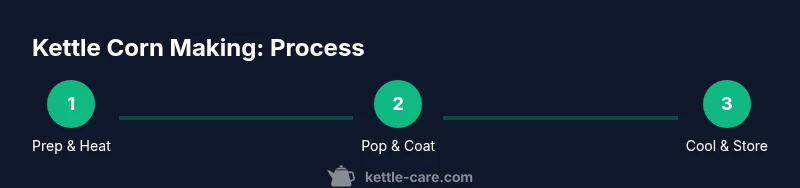
- 1
Gather and prep your ingredients
Set out all ingredients and tools. Measure kernels, sugar, and salt. Have your pan and spatula ready so you can move quickly once heat begins.
Tip: Organization reduces waiting time and helps prevent scorching. - 2
Preheat and test the pan
Place the pan on medium heat and add a small amount of oil to test temperature. The oil should shimmer but not smoke. This establishes a stable base for even popping.
Tip: A steady, controlled start prevents hot spots. - 3
Add kernels and cover loosely
Pour a single layer of kernels into the pan and secure the lid loosely to allow steam to escape. Keep the temperature steady so most kernels pop rather than burn.
Tip: Avoid crowding; a crowded pan slows popping and leads to uneven coating. - 4
Wait for popping to begin
When pops start, shake the pan gently to evenly distribute heat. Keep the lid slightly ajar to vent steam while the kernels pop.
Tip: Patience at this stage yields more uniform kernels. - 5
Melt butter and sugar in a separate component
In a small pan, melt butter and gently warm the sugar so it’s ready to coat. Do not let the mixture boil vigorously.
Tip: Avoid overheating sugar to prevent burning. - 6
Coat the popcorn
When popping slows, pour the butter-sugar mixture over the popped corn. Stir quickly and evenly to coat without clumping.
Tip: Work fast but carefully as the coating will harden soon. - 7
Finish popping and cool
Continue to shake and move the coated popcorn for another minute. Transfer to parchment to cool and set.
Tip: Spread thinly to prevent sticking during cooling. - 8
Store properly
Once cooled, transfer kettle corn to an airtight container. Store in a cool, dry place for best texture.
Tip: Avoid humid environments to maintain crunch.
Frequently Asked Questions
What is kettle corn and how does it differ from caramel corn?
Kettle corn is popcorn coated with a light, sweet, and slightly buttery glaze that’s applied while the kernels are still warm, producing a glossy finish. Caramel corn uses a thicker, richer caramel that coats more heavily and can stay sticky. The key difference is texture and sweetness intensity.
Kettle corn is a light, glossy popcorn with a gentle sweetness; caramel corn is thicker and stickier. For a quick comparison, kettle corn is often crisper and less sweet.
What equipment do I need to make kettle corn on the stove?
A heavy-bottom pan with a lid, popcorn kernels, a high-heat neutral oil, sugar, butter, salt, measuring spoons, and a stirring implement are sufficient. Optionally, a candy thermometer helps you monitor sugar temperature. The solid toolkit keeps kettle corn making simple and repeatable.
All you need is a big pan, oil, kernels, sugar, butter, salt, spoons, and a spatula.
How can I prevent sugar from burning?
Maintain medium-high heat and add sugar only when kernels have started popping or shortly after. Stir or swirl to distribute heat evenly, and remove from heat briefly if the sugar begins to darken too quickly. Quick coating is essential for a glossy finish without scorching.
Keep the heat steady and coat quickly to avoid burning the sugar.
How long does kettle corn stay fresh?
Store cooled kettle corn in an airtight container in a cool, dry place. It’s best within a week for optimal crispness. Exposure to moisture reduces texture and flavor over time.
Keeps best for about a week in a sealed container in a cool place.
Can I customize flavors or adjust sweetness?
Yes, you can add vanilla, cinnamon, or a pinch of chili for a spicy kick. Start with small amounts and adjust to taste. Keep the total sugar modest to avoid overpowering the corn.
Try small flavor tweaks like vanilla or cinnamon and taste as you go.
Is kettle corn safe for kids?
Kettle corn is generally safe when prepared with careful handling of hot sugar and oil. Let it cool fully before serving to avoid burns, and supervise children during the cooking process or choose a ready-made option if preferred.
Serve only when cooled and supervise kids during the process.
Watch Video
Highlights
- Choose a wide, heavy pan for even popping.
- Coat hot kernels quickly to avoid grainy texture.
- Control heat to prevent sugar scorch and ensure glossy finish.
- Cool completely before storing to maintain crispness.