Replace kettlebell with dumbbell: a practical substitution guide
Learn how to safely replace a kettlebell with a dumbbell in common workouts. Weight guidance, movement substitutions, and progression strategies to preserve form and results.


You can substitute a kettlebell with a dumbbell by matching weight and adapting the movement to maintain form and safety. Use a dumbbell that mirrors the kettlebell’s load, grip it securely, and modify hinges, swings, and isolation moves to reduce strain on the wrists. Start with lighter loads, master form, and listen to your body.
Why replacing kettlebell with dumbbell matters
Substituting a kettlebell with a dumbbell is a practical skill for workouts when space, equipment, or accessibility constraints arise. The goal is to preserve the stimulus of the movement while maintaining safety and form. According to Kettle Care, substituting with a dumbbell can help maintain training consistency when a kettlebell is unavailable and can reduce joint strain if the load is managed carefully. The Kettle Care team found that thoughtful substitutions work best when you respect grip, loading, and tempo, ensuring the movement remains controlled rather than ballistic. This section explains when substitutions are appropriate and how to approach them without compromising outcomes.
Key benefits include: easier access to home gym setups, customizable weight progressions, and the ability to tailor grip and load to your comfort level. You’ll also discover how to think through weight matching, movement pattern choices, and tempo to keep training effective even when a kettlebell isn’t available.
As you progress, remember that the aim is to keep the core mechanics intact: hips hinge, core braced, and shoulders stable. If you’re unsure, start with your strongest cues (breath, brace, and hinge) and progressively tune your form. The aim is safe, sustainable improvement, not quick, risky leaps.
The Kettle Care team recommends recording your reps and tempo for several sessions to track how the substitution feels relative to your kettlebell workouts. Consistent practice with proper form yields similar adaptations over time, even with a different tool.
In short, replacing a kettlebell with a dumbbell is not a one-size-fits-all move; it requires weight matching, movement adjustments, and mindful progression to protect joints and maximize results.
How to choose the right weight when replacing a kettlebell
Choosing the correct weight is the single most important decision when you replace a kettlebell with a dumbbell. Start by identifying the heaviest dumbbell you can handle with good form for 8–12 controlled repetitions in the chosen movement. If your reps degrade or form breaks, drop weight and rebuild tempo. A practical rule of thumb is to begin with a weight that feels challenging but controllable for that rep range, then adjust after a couple of sets.
For ballistic moves like swings, you may need a lighter weight than your kettlebell due to grip geometry and moment arm. For hinge-based patterns (such as deadlifts), you can often use a heavier dumbbell, provided you maintain a neutral spine and controlled tempo. If you’re replacing a 16 kg kettlebell, consider starting with two sets of 8–10 reps at 12–20 kg per dumbbell (or a single dumbbell of equivalent load depending on your setup). The goal is to keep reps crisp rather than chasing maximal load.
Record your weight choices and outcomes across sessions. This helps you monitor progress and prevents you from pushing beyond safe limits. If you experience sharp pain, dizziness, or wrist discomfort that doesn’t subside, pause and reassess technique and load. The key is steady, progressive overload with sound form, not raw mass.
Movement substitutions explained: goblet squat, dumbbell swing, and dumbbell row
When replacing kettlebell movements, the most common substitutions fall into three categories: goblet squats, dumbbell swings (or deadlifts as a hinge alternative), and dumbbell rows or carries. Goblet squats use a dumbbell held at chest height, which preserves the front-loaded bias and torso upright posture similar to a goblet squat with a kettlebell. Dumbbell swings are typically performed with two hands on a single dumbbell or across both hands, offering a hip-hinge dynamic similar to a kettlebell swing while allowing more comfortable grip mechanics for some people. Dumbbell rows and carries replicate pulling strength and posture demands of many kettlebell rows and drags, providing a posterior chain focus without the unique kettlebell grip.
Here are practical cues for each:
- Goblet squat: hold the dumbbell vertically by one end at chest level, elbows tucked, feet shoulder-width apart. Sit back into the hips and keep the chest tall. Tempo: 2 seconds down, 1 second pause, 2 seconds up. Progress by increasing weight, not reps, as form stays precise.
- Dumbbell swing/deadlift: for a dumbbell swing, grip the weight with both hands, hinge at the hips, and drive with hips while maintaining a neutral spine. If a swing feels unsafe, perform a dumbbell deadlift instead, focusing on hip hinge and braced core. Tempo: 2 seconds down, 1 second pause, 1–2 seconds up.
- Dumbbell row: brace the core, hinge slightly, and pull with the shoulder blade rather than the elbow. Maintain a flat back and don’t jerk. Tempo: 2 seconds up, 1 second squeeze, 2 seconds down.
Substitutions should reflect your goals—whether building strength, hypertrophy, or conditioning. If you’re aiming for power or ballistic work, consider lower-rep sets with heavier loads and longer rest periods, ensuring you can complete each rep with solid technique. Clarity of movement is more important than chasing heavier weight when you’re working with a different tool.
Programming and progression for substitution workouts
Programming substitutions isn’t about copying a kettlebell plan verbatim; it’s about preserving the underlying stimulus and adjusting to the load and tool you have. A simple framework is to build a 4- to 6-week progression that gradually increases either load, reps, or the number of sets while maintaining form and tempo. Start with 2–3 weekly sessions focusing on compound movements (goblet squats, dumbbell swings, dumbbell rows) and add a dedicated conditioning day as capacity builds.
A sample progression could look like:
- Week 1–2: 3 sets of 8–12 reps per movement, 60–90 seconds rest between sets.
- Week 3–4: 3–4 sets of 8–12 reps, add 1–2 reps per set when possible or increase weight slightly while preserving form.
- Week 5–6: Move to 4 sets of 6–10 reps, emphasizing explosive hip drive or controlled tempo where appropriate.
Watch for recovery signs: if you’re consistently sore for more than 48 hours, dial back volume by 20–30% or add an extra rest day. Use tempo variations (slow eccentrics, paused reps) to intensify without increasing load drastically. By tracking reps, sets, and perceived effort, you’ll gain the ability to substitute kettlebell work with dumbbells while still driving progressive overload.
Common mistakes and safety considerations
Substituting kettlebells with dumbbells introduces common pitfalls. The most frequent issues include: overloading too quickly, neglecting a neutral spine, grip fatigue causing compensatory movements, and using jerky, explosive motions that place stress on the wrist or lower back. To mitigate these risks, prioritize form over weight, use a mirror or video feedback, and ensure your warm-up primes hips, shoulders, and wrists.
Safety tips include:
- Maintain a brace in the core and a neutral spine during all movements.
- Use a wrist-friendly grip; where pain arises, switch to two-handed grips or a lighter weight.
- Pace your tempo and avoid rushing through reps to protect joints.
- Keep a clear space around you to prevent collisions with furniture or equipment.
If you experience sharp pain, dizziness, or numbness, stop immediately and seek guidance from a qualified trainer or healthcare professional. Gradual progression is safer and more effective than chasing big loads early on.
Equipment setup and space optimization
A clean, safe workout space is essential when substituting kettlebell movements with dumbbells. Begin with a non-slip mat, adequate lighting, and a clear 6–8 feet of space around you to accommodate wide stances and hip hinges. Keep the dumbbells within easy reach to avoid overreaching. A wall mirror or video camera can help you monitor form. Use a secure grip and ensure the dumbbell is stable in your hands to prevent rolling or slipping during dynamic movements. Footwear should be flat-soled and comfortable, enabling stable balance during squats and rows.
For wrist comfort, consider padding or wrist wraps if you experience tenderness after sessions. Always warm up the wrists and forearms with light mobility work before heavier lifts. By preparing your space and gear, you reduce injury risk and improve movement quality.
Authority sources and further reading
For evidence-based guidance on safe resistance training substitutions and form, consult credible sources. Here are a few you can bookmark:
- CDC: Physical Activity Basics (https://www.cdc.gov/physicalactivity/basics/index.html)
- NIH: National Institute on Aging — Exercise and Physical Activity (https://www.nia.nih.gov/health/exercise-physical-activity)
- ACSM: Exercise Science and Guidelines (https://www.acsm.org/)
These sources provide foundational principles on safe loading, progressive overload, and movement mechanics that underpin substitution strategies. For practical in-gym coaching and technique checks, pairing these references with a qualified trainer can help tailor substitutions to your body and goals.
Quick-start substitution program: 4-week sample plan
This brief program demonstrates how to apply the substitution approach using dumbbells in place of a kettlebell. Week 1 focuses on perfecting form with moderate loads. Week 2 introduces progressive overload via heavier weights or tempo variations. Week 3 adds one additional set. Week 4 cycles back to Week 2 intensity with refined technique.
- Week 1: Goblet squat, dumbbell swing (two-handed), dumbbell row — 3 sets of 10 reps each, 60 seconds rest.
- Week 2: Goblet squat, dumbbell swing (two-handed), dumbbell row — 3 sets of 12 reps, tempo 2-1-2, 60 seconds rest.
- Week 3: Goblet squat, dumbbell swing, dumbbell row — 4 sets of 8–10 reps, add 2–3 minutes rest if needed.
- Week 4: Return to Week 2 intensity with improved form and shorter rest, aiming for smoother tempo and deeper movement control.
Note: Modify weight to keep reps within the target range while preserving form.
Final checks before you start
Before you begin substituting kettlebell workouts with a dumbbell, perform a quick checklist:
- Confirm your weight selections allow for 8–12 clean reps with good form.
- Clear the area and ensure the surface is non-slip.
- Warm up hips, spine, shoulders, and wrists.
- Set a timer for rest intervals and adhere to a consistent tempo.
- Record your weights, reps, and subjective effort to monitor progress over weeks.
With thoughtful planning and disciplined execution, replacing a kettlebell with a dumbbell can be a practical, effective approach to maintaining training momentum while staying safe.
Authority sources (additional reading)
- CDC – Physical Activity Basics: https://www.cdc.gov/physicalactivity/basics/index.html
- NIA – Exercise and Physical Activity: https://www.nia.nih.gov/health/exercise-physical-activity
- ACSM – American College of Sports Medicine: https://www.acsm.org/
Tools & Materials
- Dumbbells (adjustable or fixed)(Choose weight range to match kettlebell equivalents for 8–12 reps; adjust as form improves.)
- Non-slip workout mat(Provides knee and wrist protection; ensures stable footing.)
- Timer or stopwatch(Track tempo and rest periods precisely.)
- Mirror or smartphone for form feedback(Optional but helpful for evaluating posture and alignment.)
- Supportive, flat-soled footwear(Stability-focused shoes help maintain balance during hinging movements.)
- Water bottle(Stay hydrated during training.)
Steps
Estimated time: 45-60 minutes
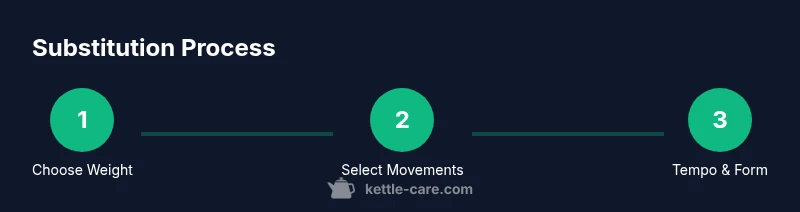
- 1
Choose the right weight
Select a dumbbell that allows 8–12 controlled reps with solid form for the chosen movement. If your form breaks before reaching 12 reps, reduce the weight and rebuild tempo. This establishes a safe baseline for all substitute movements.
Tip: Test 2 sets with a conservative weight before progressing. - 2
Set up your space
Clear a safe workout zone with enough room for stump-free movement. Place the mat on a stable surface and keep the dumbbells within easy reach to reduce awkward reaching during sets.
Tip: Stand with feet hip-width apart and have a fixed stance before starting. - 3
Warm up targeted joints
Do 5–7 minutes of light cardio plus mobility work for hips, shoulders, and wrists. Include bodyweight squats, arm circles, and wrist stretches to prepare for hinging and grip demands.
Tip: Use a slow tempo for warm-ups to prime neuromuscular control. - 4
Perform goblet squat substitute
Hold the dumbbell vertically at chest level with both hands. Hinge at the hips, sit back, then drive through the heels to stand. Keep elbows tucked and chest up throughout.
Tip: Keep a tall spine and avoid letting knees cave inward. - 5
Incorporate dumbbell swing/deadlift
For a dumbbell hinge, use two hands to grip the weight. Hinge at hips, drive with the hips, and maintain a neutral spine. If a swing feels risky, perform a controlled deadlift instead with the dumbbell.
Tip: Focus on hip drive rather than pulling with the arms. - 6
Add rows or carries for posterior strength
From a slight hip hinge, pull the weight toward your torso, focusing on squeezing the shoulder blade at the top. Alternatively, perform a farmer’s carry with dumbbells for grip and core work.
Tip: Engage the lats to stabilize the shoulder during each rep. - 7
Progress gradually and reassess
Every 2–3 weeks, reassess your weights and reps. If form remains solid and you’re meeting targets, increase weight or sets slowly. Use tempo changes to intensify rather than rushing through reps.
Tip: Keep a training log to track progressive overload.
Frequently Asked Questions
Can I replace kettlebell with dumbbell for all workouts?
Many kettlebell moves can be substituted with a dumbbell, but some ballistic or momentum-based sequences rely on kettlebell-specific dynamics. When in doubt, choose safer, slower progressions and prioritize form.
Yes, many substitutions are possible, but some ballistic moves rely on kettlebell momentum. Focus on safer, slower progressions and form.
What weight should I choose when substituting?
Start with a dumbbell weight that allows you to complete 8–12 controlled reps with good form. If form deteriorates, reduce weight and rebuild tempo before adding load.
Begin with a weight you can control for 8–12 reps with perfect form. If form slips, lighten the load.
Are there moves that are safer to start with?
Goblet squats, dumbbell deadlifts, and dumbbell rows are typically safer starting points when substituting for kettlebell work. They offer similar loading patterns with more stable grip options.
Goblet squats, dumbbell deadlifts, and rows are great starting moves when substituting.
Will substitution hinder progress?
With proper programming and progressive overload, substitutions can achieve similar strength and conditioning outcomes. The key is to maintain effort, tempo, and form.
If you program carefully and progress gradually, you can keep making gains.
How should I progress weight and reps?
Increase weight gradually while preserving form, typically every 2–4 weeks, and adjust reps to stay within 8–12 range for most moves.
Progress gradually by increasing weight or reps while maintaining form.
Is wrist or elbow pain a sign to stop?
Yes. If you experience pain beyond normal fatigue, stop and check your technique. Seek guidance if pain persists.
Stop if pain occurs and reassess technique.
Watch Video
Highlights
- Match weight carefully to preserve stimulus
- Use safe substitutions (goblet squat, dumbbell swing, rows)
- Progress gradually with form-first approach
- Prioritize warm-up and space to prevent injuries
- Log progress and adapt over weeks